
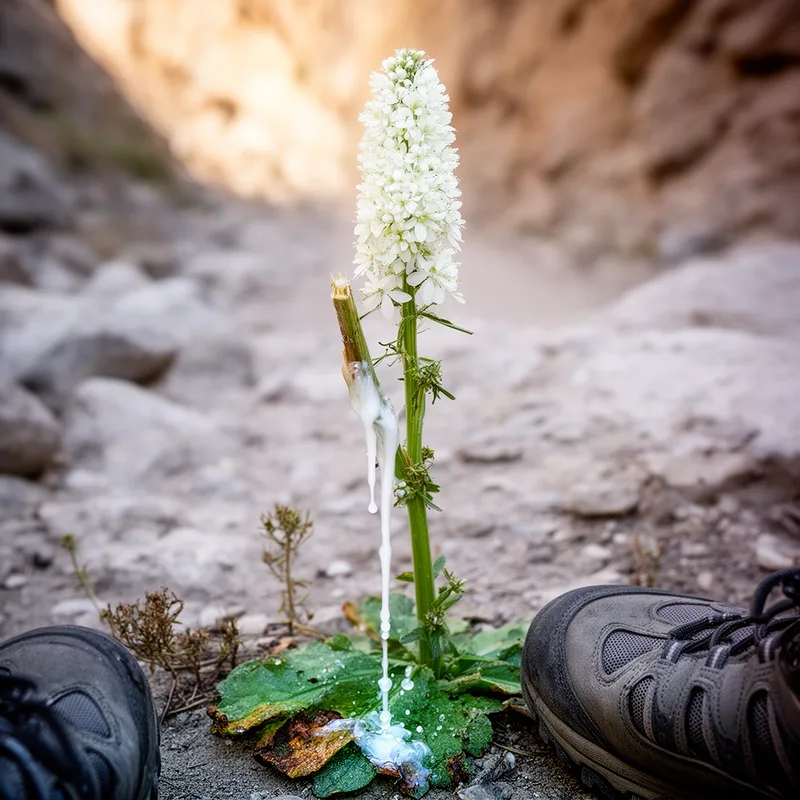
ghost weed
- noun
- US
- We found a patch of ghost weed near the canyon, blooming with pale white bracts.
Examples
-
The milky sap of the ghost weed can be highly toxic to livestock.
-
Hikers are warned not to touch ghost weed because of its poisonous properties.
-
Watch out for ghost weed!
-
The ghost weed can be found in many parts of California.
-
Hikers are warned not to touch ghost weed because of its poisonous properties.
-
The milky sap of the ghost weed can be highly toxic to livestock.
-
We found a patch of ghost weed near the canyon, blooming with pale white bracts.
Synonyms

A low annual garden plant with white-edged leaves and poisonous milky sap

A plant with white showy flowers and poisonous milky sap
Surface Forms
Morphology
A B1 learner who knows 'ghost' and 'weed' can plausibly infer that this refers to a plant (a 'weed') with ghost-like or pale/ethereal qualities, so the basic referent is compositional. However, the specific botanical identity (a species of spurge) and the detail about highly poisonous milky sap are encyclopedic facts not predictable from the constituents, making the expression only partially predictable.
Etymology
Ghost weed gets its name from the plant's pale white bracts that look like tiny ghosts among the dry ground and from being a common weed in those places; it also has a milky sap that can harm animals. That's why the name warns people and the plant is known as 'poisonous'.

