
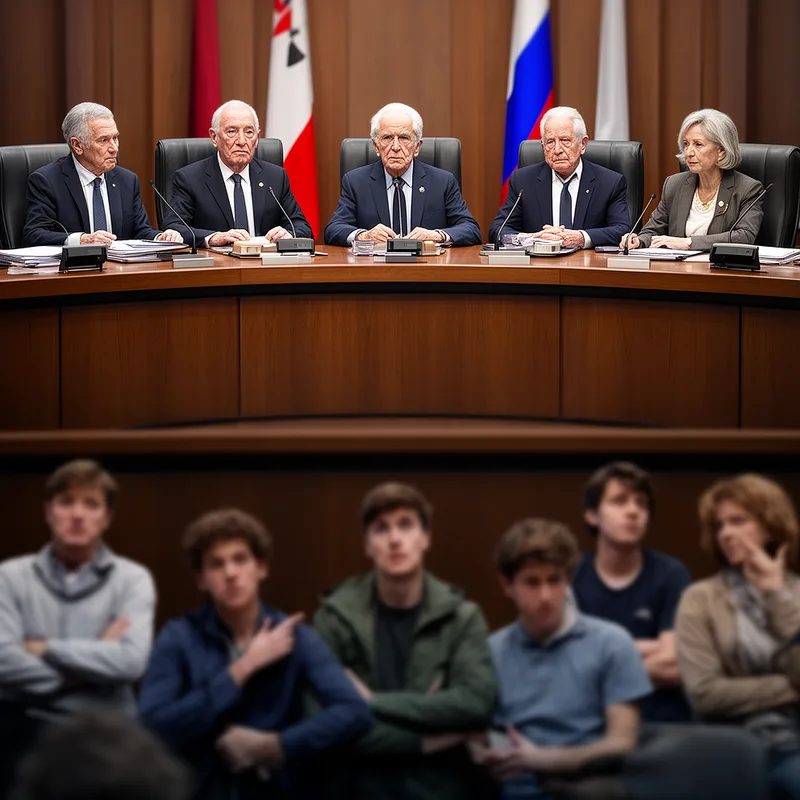
gerontocratic


 1
9.9
- adjective
- /ˌdʒɛrənˈtɒkrætɪk/
- Formal
- Many cultures have gerontocratic systems where elders hold significant power and influence over community matters.
Examples
-
That children wield such power across the Grassfields is especially interesting because it occurs in what are otherwise highly stratified and gerontocratic societies.
Academic text (2001) -
Villages in Nigeria were organized on gerontocratic principles and largely lacked political offices.
Academic text (1994) -
This essay suggests that although twins represent a surfeit of fertility and present contradictions for the social structure, their power poses similar problems to that of other juveniles in a gerontocratic system.
Academic text (2001) -
In this essay, I suggest that although multiple-birth twins represent a surfeit of fertility and present contradictions for the social structure, their powers pose problems similar to those of other juveniles in a gerontocratic society.
Academic text (2001) -
In a gerontocratic society, decisions are typically made by the elderly, emphasizing their wisdom and experience.
-
The council was criticized for its gerontocratic approach, prioritizing the opinions of older members over the youth.
Antonyms

Surface Forms
Morphology
gerontocratic = gerontocracy (opaque) = geront + crat + ic
Forming an adjective from the noun 'gerontocracy' by adding '-ic' is a regular and predictable derivation.
Etymology
The word gerontocratic comes from two Greek parts: geronto- meaning 'old' (seen in geriatric) and -cratic meaning 'rule' (seen in democratic). So gerontocratic describes a system 'ruled by older people', which is why we use it for governments or groups led mainly by older people.