
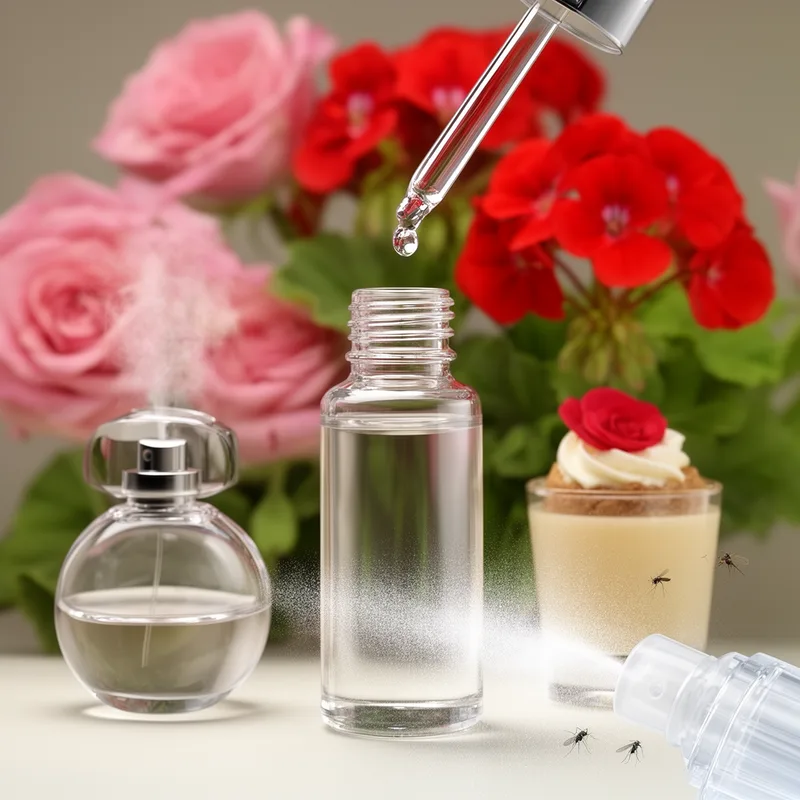
geraniol


 1
8.1
- noun
- /ˈdʒɛrəˌniˌɔl/
- Specialized
- According to the company, eating their candy—which contains rose oils and an antioxidant called geraniol—guarantees a fresh scent oozing from your pores for the next six hours.
Examples
-
Insect repellents often contain geraniol, a natural substance that helps keep bugs away.
-
Perfume manufacturers use synthetic versions of geraniol to replicate its sweet, rosy scent.
-
The fragrant geraniol in the essential oil is what makes it popular in aromatherapy.
Surface Forms
Morphology
geraniol = geranium (semi-transparent) = gerani + ol
Built from the plant name 'geranium' plus the chemical suffix '-ol' (alcohol); the relation is recognizable but requires some domain knowledge of chemical naming.
Etymology
Geraniol comes from the plant name geranium, because this floral scent was first found in geranium oil, and the ending -ol means 'alcohol'. A helpful memory is that geranium comes from an old word for 'crane' because the seed pods look like a bird's beak, but today geraniol simply means the alcohol from geranium oil that gives a floral smell.