
geostrophic


 1
9.9
- adjective
- /ˌdʒiːoʊˈstrɒfɪk/
- Specialized
- Understanding geostrophic currents is essential for predicting ocean behavior in response to wind conditions.
- geostrophic currents
Examples
-
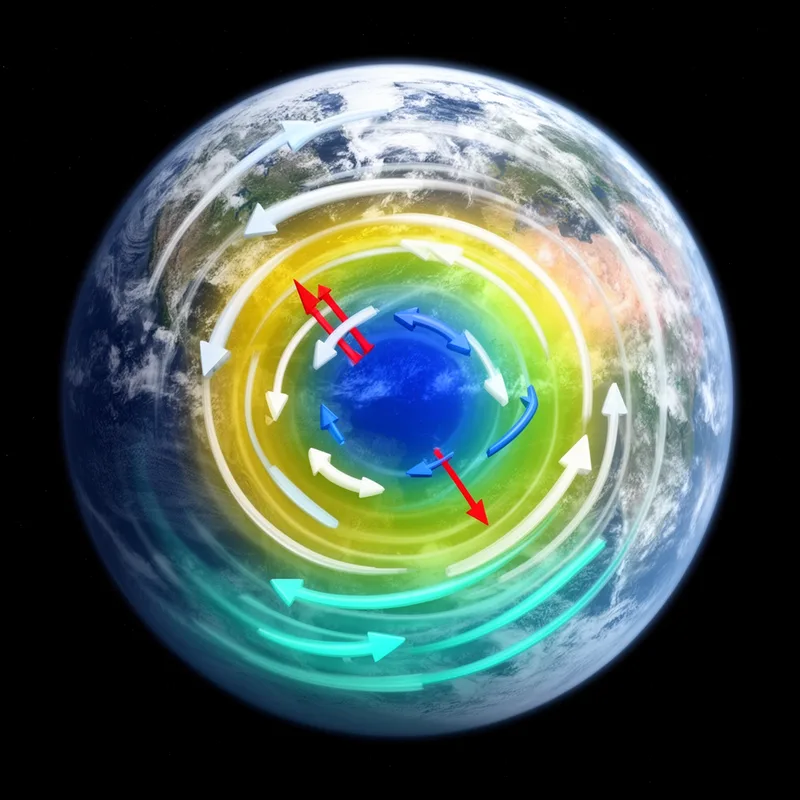
In meteorology, a system is described as geostrophic when the pressure gradient force and the Coriolis force are in balance.
-
Used "geostrophic winds derived from reanalysis data to calculate the Fram Strait ice area export back to 1957, finding that the sea ice area export recently is about 25% larger than during the 1960s."
Blog text (9) -
And so these conclusions followed from the geostrophic balance assumption.
-
And that's what we expect from geostrophic balance.
-
For this purpose, geostrophic currents and wind data were used as input in simulations aimed at describing the dispersal trajectories of passive particles released at different points in the three study areas.
Academic text (2018) -
The formula for predicting wind patterns relies on the geostrophic balance between forces affecting airflow.
Surface Forms
Morphology
geostrophic = geostrophy (opaque) = geo + stroph + ic
The adjective is formed from the technical noun 'geostrophy' plus '-ic', but the meteorological meaning is not recoverable for an average learner.
Etymology
The word geostrophic comes from geo- ('earth') and -strophic (from a word meaning 'turning'), so it links to the Earth's turning. That's why geostrophic describes winds or currents that are turned by the Earth's rotation and are in balance with pressure forces.