

geophysical science
- noun
- /ˌdʒiːəˈfɪzɪkəl ˈsaɪəns/
- Specialized
- The study of geophysical science allows scientists to better understand Earth's interior processes.
Examples
-
Our work in the geophysical sciences would be impossible without the contributions of leaders in education, legislation, research, philanthropy and government.
-
In geophysical science, researchers analyze data from seismic waves to learn about tectonic activity.
-
Many students pursue degrees in geophysical science to contribute to solving environmental issues.
Synonyms
 3
6.7
3
6.7

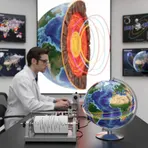
The study of Earth's physical features and natural processes like earthquakes and gravity
Surface Forms
Morphology
The meaning is directly and compositionally derived from 'geophysical' (pertaining to Earth's physical characteristics) plus 'science' (a field of study), so it denotes the scientific study of Earth's physical properties and processes. This is a regular noun–modifier compound found cross-linguistically, so a B1 learner who knows both constituents will readily infer the MWE meaning.
Etymology
Geophysical science combines geo- meaning 'Earth' and physical meaning 'using physics or physical tools'. Imagine scientists sending waves into the ground or using magnets to 'see' inside the planet, so the phrase means the part of science that uses physical methods 'to study' the 'Earth'.