
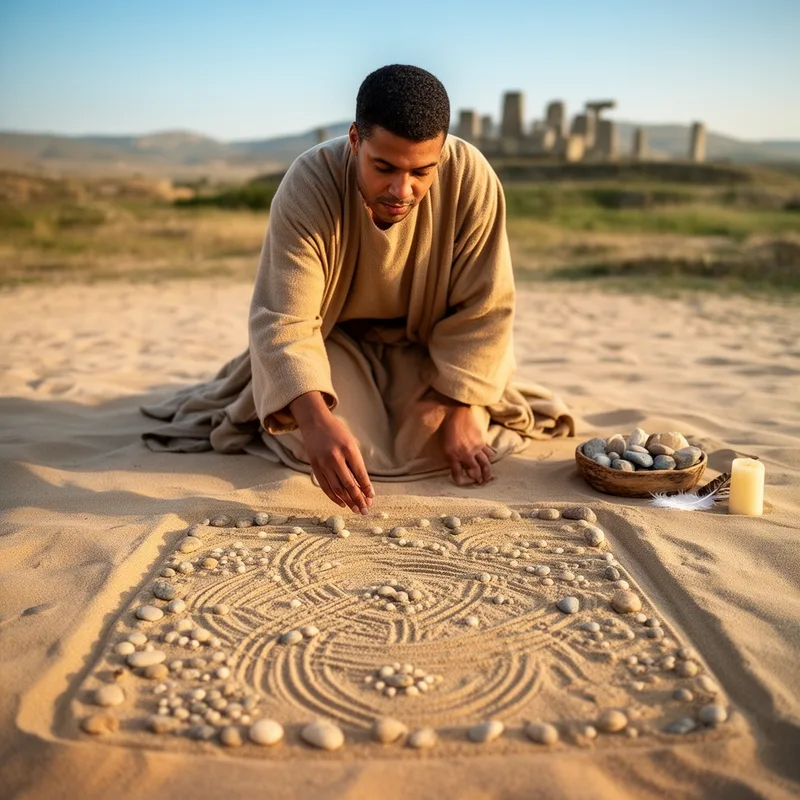
geomantic
- adjective
- /ˌdʒiːəˈmæntɪk/
- Archaic
- Professional geomancers knew how to evaluate the geomantic conditions of a site, so people hired them to find auspicious locations.
- geomantic idea
- geomantic shortcomings
- geomantic purpose
Examples
-
A geomantic reading of the area suggested that it was an auspicious location for building a house.
-
Arguably the most majestic human-built mountain for a geomantic purpose is the Jingshan Mountain, behind the Forbidden City Palace of Beijing, China.
Academic text (2011) -
Such modifications of landscape through various means of pibo are based largely on the following three geomantic ideas:
Academic text (2011) -
However, he only briefly mentioned the Korean geomantic modification of the landscape.
Academic text (2011) -
Without understanding what geomancy is, it is not possible to appreciate what the geomantic idea of pibo is.
Academic text (2011) -
However, recent scholarship on human modification of nature, or symbolic landscape, has not yet examined this geomantic idea.
Academic text (2011) -
Through fieldwork, one can confirm the location and the intensity of the geomantic remedial activities.
Academic text (2011) -
For that reason, villagers worked together and endured the hardship involved with the construction of various geomantic works.
Academic text (2011) -
A geomantic proverb says that "there are no auspicious sites without any flaws."
Academic text (2011) -
The Chinese imperial governments created and managed this artificial mountain to make up for the shortcomings of Beijing's geomantic landscape.
Academic text (2011)
Synonyms



 1
9.9
Relating to ways people try to tell the future
Surface Forms
Morphology
Etymology
Geomantic comes from geo- meaning 'earth' and -mantic meaning 'reading signs', and geo- is the same root you see in geography. So geomantic literally means 'reading the earth', which is why it describes rituals that look at patterns in the ground to find spiritual meaning or choose a site.