
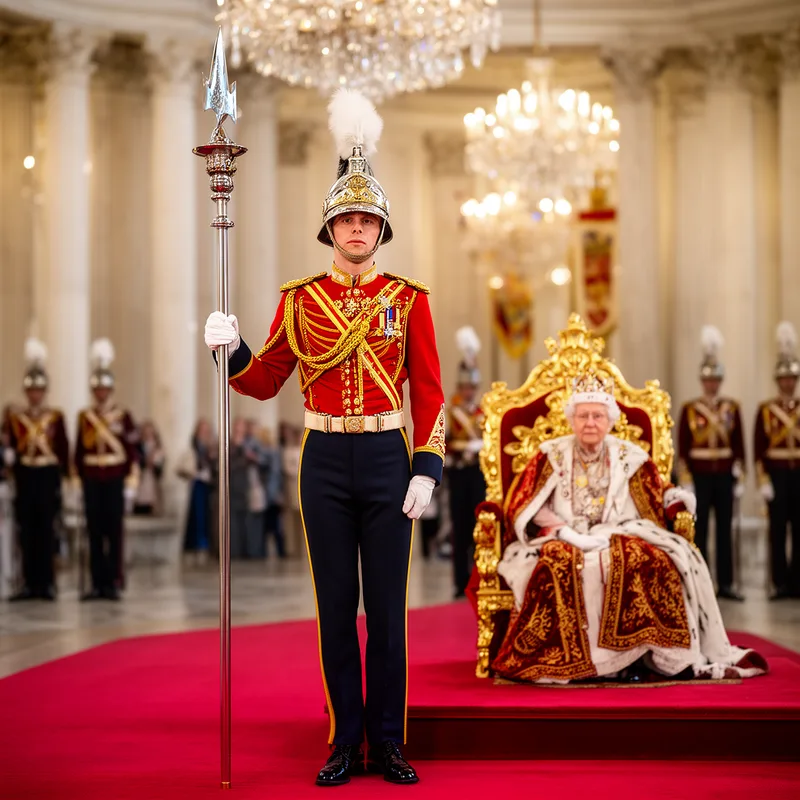
gentleman-at-arms
- noun
- /ˈdʒɛntəlmən æt ɑːmz/
- UK
- The gentlemen-at-arms are easily recognized by their ornate uniforms.
Examples
-
The gentleman-at-arms stood proudly during the ceremony.
-
It is a great honor to be appointed as a gentleman-at-arms.
-
At the coronation, a gentleman-at-arms stood solemnly by the throne.
-
Several gentlemen-at-arms participated in the royal parade.
-
During the royal parade, the gentleman-at-arms proudly marched alongside the sovereign, dressed in their ceremonial uniforms.
-
The gentleman-at-arms stood at attention, holding his sword, as the queen made her entrance to the banquet.
-
At the state event, a gentleman-at-arms escorted the dignitaries to their seats, embodying the grandeur of the occasion.
Synonyms
 2
9.9
2
9.9

A guard who wears a traditional uniform at the Tower of London
 1
9.9
1
9.9
A soldier who stands guard and takes part in British royal ceremonies


 1
9.9
1
9.9
A guard who stands near the king or queen during ceremonies while wearing a Tudor uniform
Antonyms
Surface Forms
Morphology
Etymology
The word gentleman-at-arms comes from two parts: gentleman, which once meant 'a noble or well-born man', and at-arms, which means 'ready with weapons'. So a gentleman-at-arms was originally a noble who served as the ruler's soldier, and today the title names a special ceremonial guard who stands by the king or queen.