
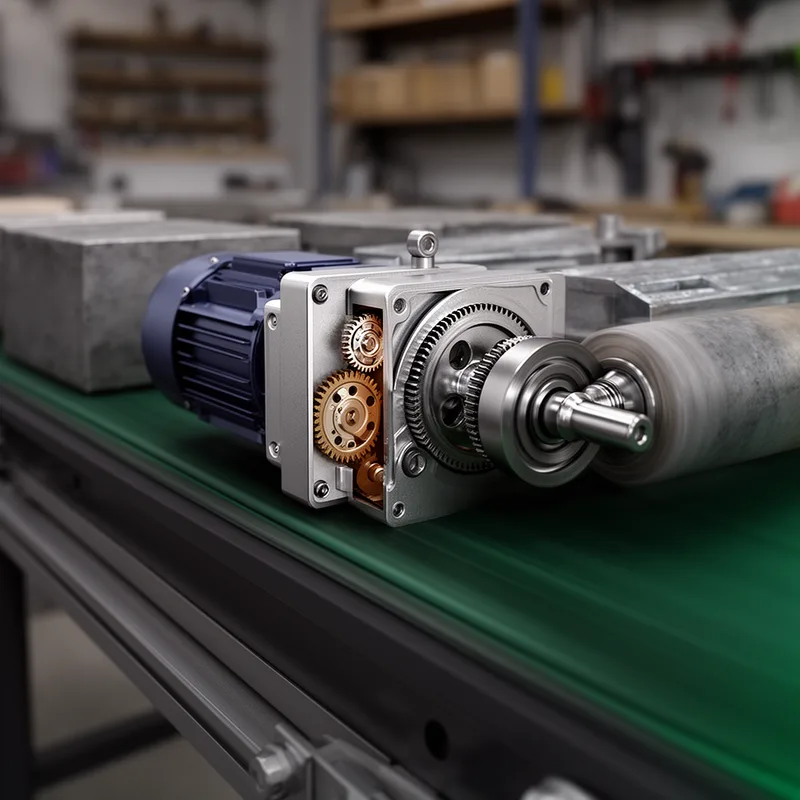
gearmotor


 1
6.8
- noun
- /ˈɡɪrˌmoʊtər/
- Specialized
- The gearmotor efficiently converts electrical power into mechanical motion while reducing speed and increasing torque.
- gearmotors and speed reducers
- motor and gearmotor
- Compact gearmotor
Examples
-
High output torque in a compact, durable design is offered by the GIL200 Series parallel shaft gearmotor.
Academic text (1998) -
Applications for the new inverter duty gearmotors include factory automation, machine tools, conveyors, and material handling and packaging.
Academic text (2005) -
The gearmotors are available with two styles of adjustable speed drives.
Academic text (1994) -
A parallel shaft gearmotor series reportedly offers up to 40 percent more torque compared to other gearmotors of the same size.
Academic text (1995) -
The gearmotors are permanently lubricated and don't require any maintenance.
Academic text (2005) -
The gearmotor features a 0.625-in. standard shaft diameter and delivers speeds of up to 350 rpm.
Academic text (1998) -
The 16-mm planetary gearmotors for OEM applications run efficiently, quietly, and at low cost, according to the manufacturer.
Academic text (2002) -
Type F DC Permanent Magnet Gearmotor measures only 1.38" in diameter and is available in lengths from 2.38" to 2.88".
Academic text (1998) -
The Model 2500 DC permanent magnet motor and gearmotor is available with the Hewlett-Packard HEDS 5500 optical encoder.
Academic text (1994) -
Our new gearmotor can handle heavy loads due to its high torque output and is ideal for industrial applications.
How Powerful

Surface Forms
Morphology
Etymology
Gearmotor is formed from the common words gear and motor, where gear means a 'toothed wheel' or device that changes speed and force, and motor means a 'machine that makes things move'. So a gearmotor is simply a motor with gears that lower the output 'speed' and give more 'turning force', which explains why it is used to increase power and control movement.