
gastropod
 1
7.5
1
7.5

- noun
- /ˈɡæstrəˌpɒd/
- Specialized
- Aptyxiella potlandica, a turreted gastropod, is the Portland Screw and is only found here.
- gastropod mollusks
- gastropod shell
- marine gastropods
Examples
-
Scientists study gastropods because their unique adaptations provide insights into evolutionary biology.
-
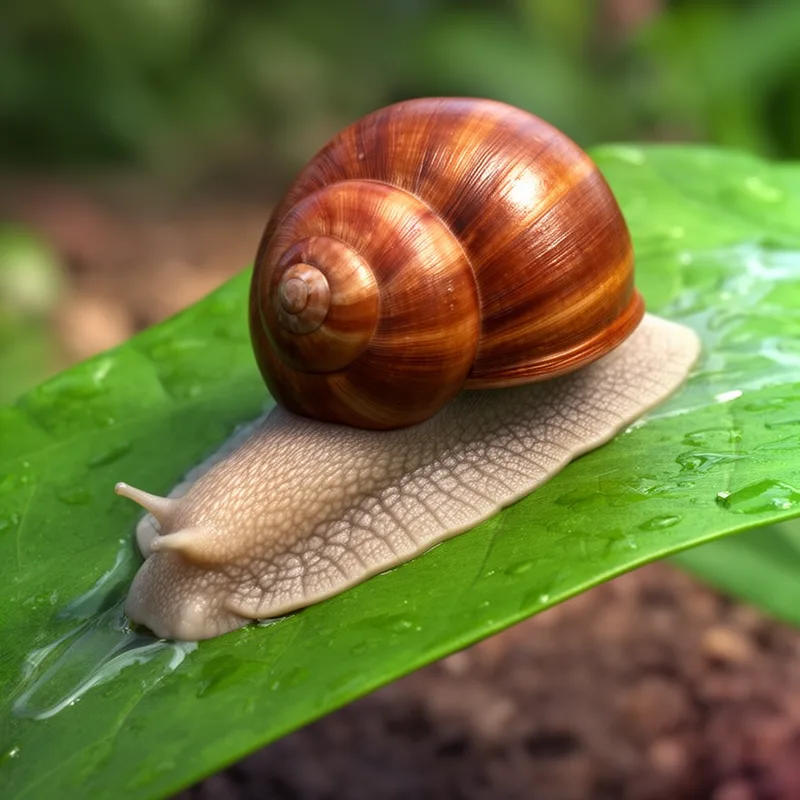
The garden was filled with colorful gastropods, including various types of snails and slugs.
-
A slug known as the "stomach foot," or gastropod, crawled around the marine land.
Academic text (2015) -
It's a predatory gastropod.
-
Examples of animals in this group are crustaceans, mollusks, worms, gastropods, and insects.
Academic text (2001) -
The shell and scales of the scaly-foot gastropod Crysomallon squamiferum are fortified with iron sulfide, a characteristic previously unheard of in the animal kingdom.
Academic text (2010) -
A common gastropod you might find in your garden is the garden snail, which is easily recognized by its coiled shell.
Synonyms
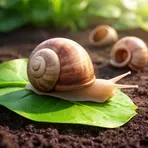
An animal with a single shell like a snail
Compounds
- Specialized
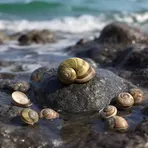
A small sea snail with a short spiral shell that closes with a hard lid and lives on rocky coasts
Surface Forms
Morphology
gastropod = gastro + pod
Formed from specialized Greek combining forms (gastro- 'stomach' + -pod 'foot') used in scientific taxonomy; these components are not readily interpretable by an average B1 learner, so the overall meaning is opaque.
Etymology
The word gastropod comes from Greek parts gastro- meaning 'stomach' and -pod meaning 'foot'. Think of a 'stomach on a foot' — snails and slugs move with a large muscular foot under their body, so the name helps you remember this group of animals.