
gastrin


 1
8.0
- noun
- /ˈɡæstrɪn/
- Specialized
- Doctors measure gastrin levels to diagnose certain stomach disorders.
Examples
-
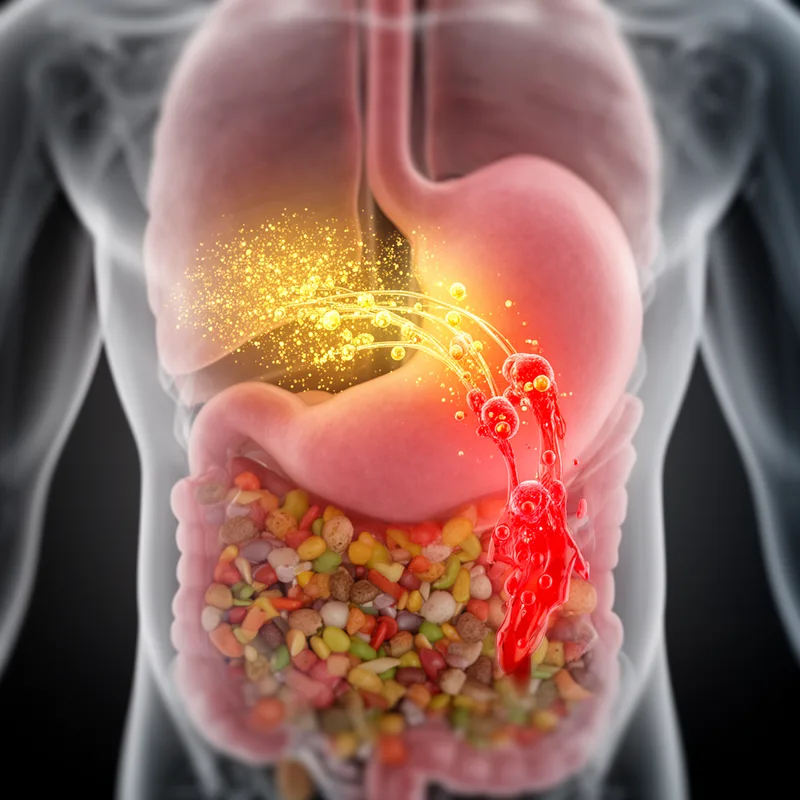
After eating a large meal, the body releases gastrin to increase stomach acid for digestion.
-
Levels of gastrin, secretin, and vasoactive intestinal peptide were normal.
Academic text (2007) -
Suppression of gastric acid secretion was proven through increased levels of gastrin.
Academic text (2016) -
When food enters the stomach, it triggers the production of gastrin, which helps break down the food.
Surface Forms
Morphology
gastrin = gastric (semi-transparent) = gastr + in
Formed from the combining form 'gastr-' (stomach) plus the protein-denoting suffix '-in'; the combining form is not a standalone English word and the protein suffix is technical, so the meaning is partly guessable but not fully obvious to general learners.
Etymology
The word gastrin comes from the Greek root gaster meaning 'stomach' and the ending -in, which is used for proteins. So gastrin is a 'stomach' substance that tells the stomach to make acid after eating.