
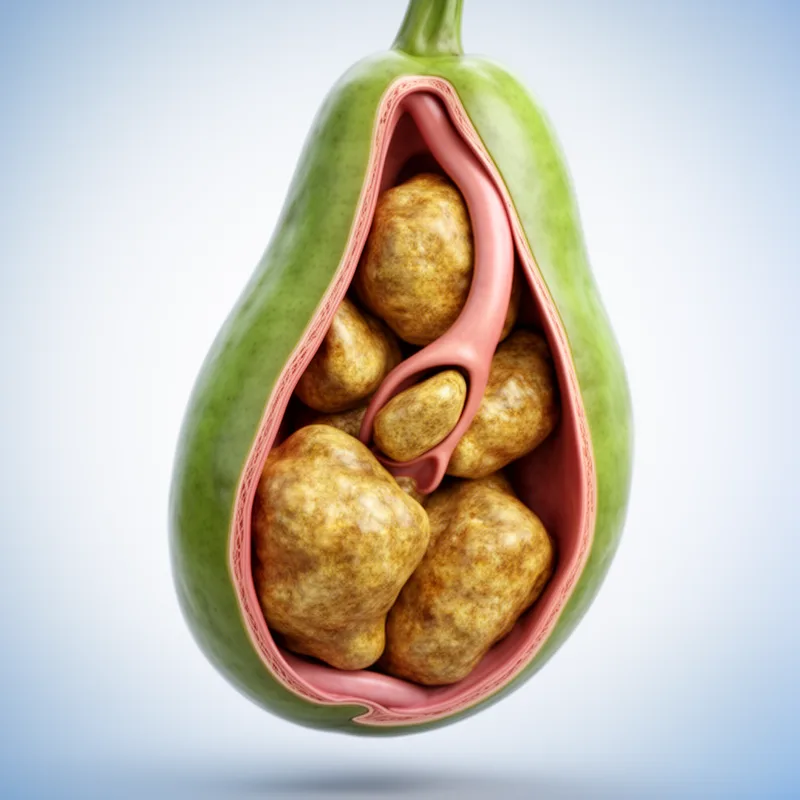
gallstone
 10
4.3

- noun
- /ˈɡɔlˌstoʊn/
- Specialized
- Women also have a markedly higher prevalence of gallstone disease.
- gallstone disease
- high prevalence of gallstones
Loading YouTube…
Watch on YouTubeSo low fat diets absolutely increase your risk of forming gallstones and and gallbladder sludge.
- So low fat diets absolutely increase your risk of forming gallstones and and gallbladder sludge.
- But I met Mike some nine months after my husband, my first husband, and I split up, and I had my gallstone problem at the same time.
- So a having a gallstone is something that we want to get rid of, obviously in our body.
- The the second cause is a gallstone and the third 'cause really is excessive, severe weight loss done too quickly.
Examples
-
After experiencing severe abdominal pain, she discovered she had a gallstone blocking her bile duct.
-
So a having a gallstone is something that we want to get rid of, obviously in our body.
-
Pete Rose had a gallstone.
-
For some strange reason, I also started to develop gallstones at this point.
Blog text (16) -
Currently in the hospital with gallstones.
-
She told me she was just having some gallstones removed.
-
Gallstones are the reason why more than 90% of patients have a cholecystectomy.
Academic text (1994) -
We conclude that the presence of gallstones is probably an important factor in the causation of bile duct cancer.
Academic text (1994) -
Many people with high cholesterol are at risk of developing gallstones.
-
He scheduled an appointment to discuss the options for removing his gallstones.
Synonyms
A hard stone that forms in the gall bladder and causes pain
Surface Forms
Morphology
Etymology
Gallstone comes from the parts gall ('bile', a bitter body fluid) and stone ('hard rock'). So a gallstone is literally a hard 'stone' made from bile in the gallbladder, which is why it means the small, hard mass that can form there.