
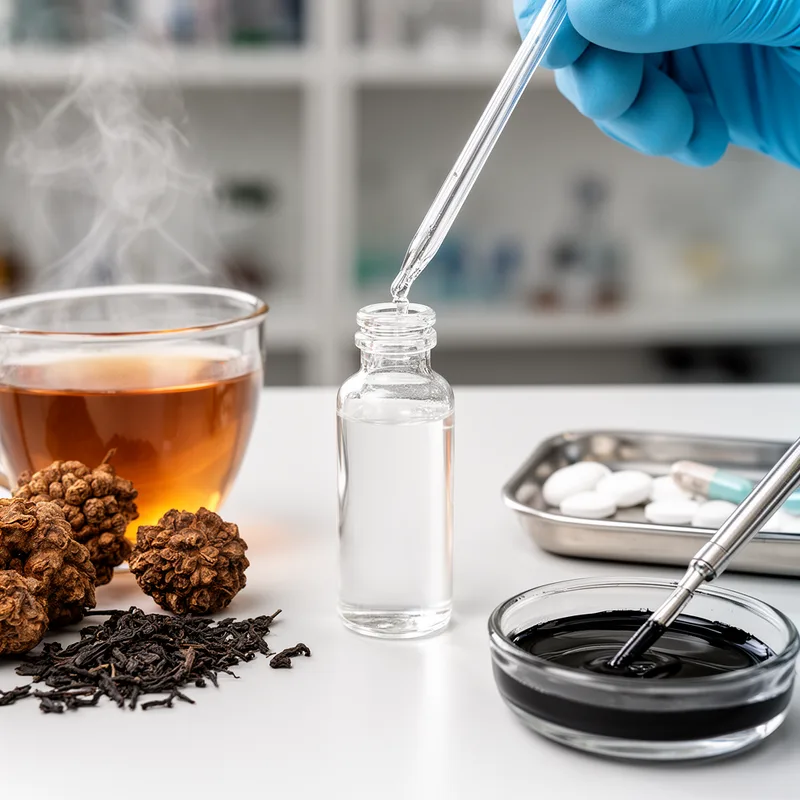
gallic acid
- noun
- /ˈɡælɪk ˈæsɪd/
- Specialized
- The laboratory tested the concentration of gallic acid in the ink to determine its quality.
- gallic acid equivalent
Examples
-
In her experiments, she measured the amount of gallic acid present in different plant extracts.
-
Total phenolic content ranged from 29.33 to 50.34 mg/g of gallic acid equivalent in leaves (Figure 2).
Academic text (2013) -
Researchers discovered that gallic acid can be used as a natural preservative in food products.
Surface Forms
Morphology
gallic + acid
This is a technical chemical name: while a B1 learner would know 'acid', the adjective 'gallic' is rare/technical (derived from oak galls or a proper name) and does not transparently convey the compound's properties. The overall meaning (a specific crystalline organic acid used in inks and dyes) cannot be derived from the constituent words alone and requires specialized knowledge.
Etymology
Gallic acid gets its name from the word gallic, which comes from the 'galls' on oak trees, and from acid, because it is a kind of acid. People used those 'galls' to make ink and found this acid inside, so the name helps explain why gallic acid is linked to inks, dyes, and some medicines.

