
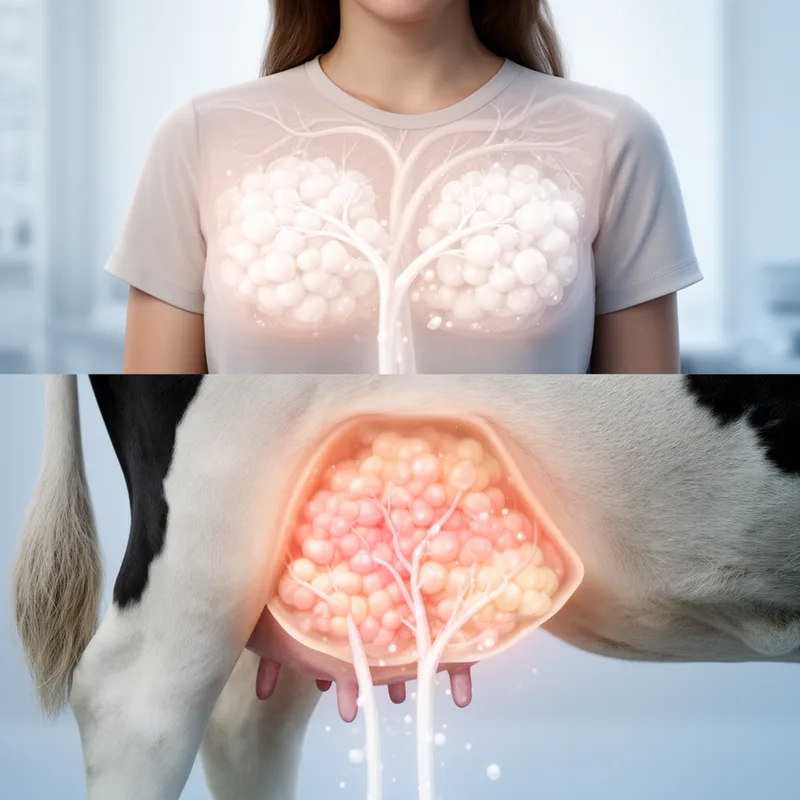
galactosis
- noun
- /ɡəˈlæktoʊsɪs/
- Specialized
- After childbirth, galactosis occurs naturally as the body produces milk for the newborn.
Examples
-
Researchers studied the process of galactosis in dairy cows to improve milk production.
-
Certain hormonal changes can stimulate galactosis in mammals.
-
After childbirth, galactosis occurs naturally as the body prepares to feed the newborn.
-
The process of galactosis is vital for nursing mothers.
-
Many mammals experience galactosis during lactation.
-
Many mammals experience galactosis during the nursing phase to provide essential nutrients to their young.
-
Researchers studied galactosis in dairy cows to understand how to enhance milk production for better yields.
Synonyms

 10
5.1
10
5.1

A time when a female animal makes milk to feed her young
How Much
- Specialized

- Specialized
Surface Forms
Morphology
galactosis = galact + osis
Formed from the Greek combining form 'galact-' (milk) + the medical suffix '-osis'; 'galact-' is not a standalone English word and the meaning is specialized medical terminology, so an average B1 learner cannot derive the meaning from familiar English vocabulary.
Etymology
The word galactosis comes from the Greek root galakt- meaning 'milk' and the ending -osis meaning 'a condition or process'. You can see the same root in galaxy, which links to the 'Milky Way' or 'milk road'. So galactosis refers to the process of producing or giving milk.