
fungible
- noun
- /ˈfʌndʒəbl/
- Specialized
- Legal contracts often specify whether goods are fungibles or non-fungibles to clarify exchange terms.
Examples
-
Oil is traded as a fungible on international markets due to its uniform quality.
-
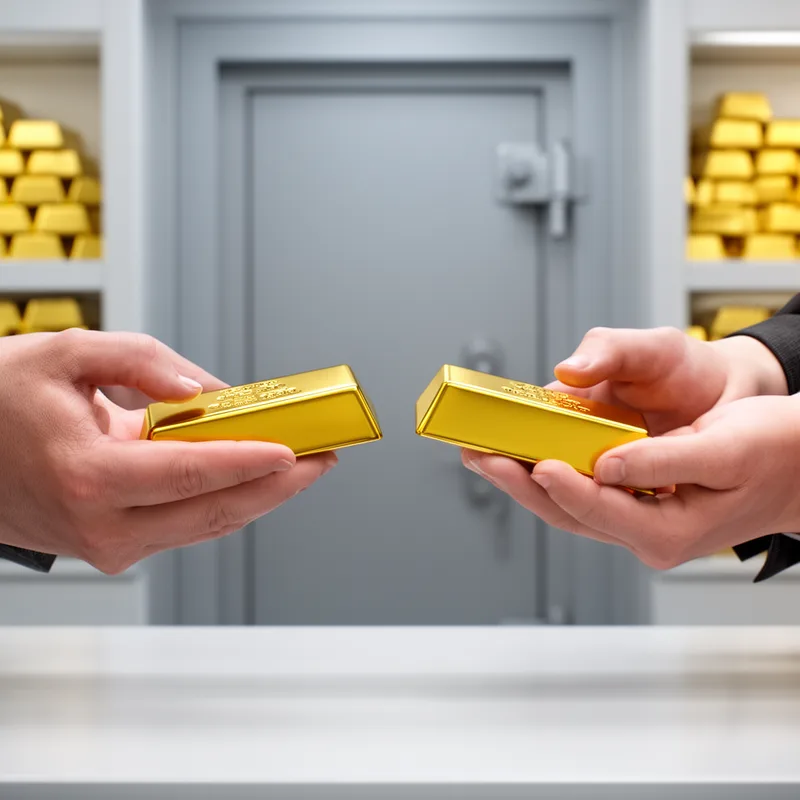
In banking, gold is considered a fungible because one unit can be substituted for another of equal value.
-
Gold is a fungible asset that can be traded easily.
-
In finance, cash is considered a fungible resource.
-
In banking, gold is considered a fungible item because one unit can be substituted for another of equal value.
-
Legal contracts often specify whether goods are fungibles to clarify their exchange terms in transactions.
-
Oil is widely recognized as a fungible commodity traded on international markets due to its consistent quality.
Surface Forms
Morphology
fungible = fung + ible
Although -ible is a familiar English suffix, the stem fung- is not a recognizable English base, so the noun meaning is not recoverable from the parts.
Etymology
Fungible as a noun comes from the same Latin parts fungi 'to perform' and -ible 'able', like in the word function. A fungible is an item you can swap for another of the same kind, for example one coin for another.

