
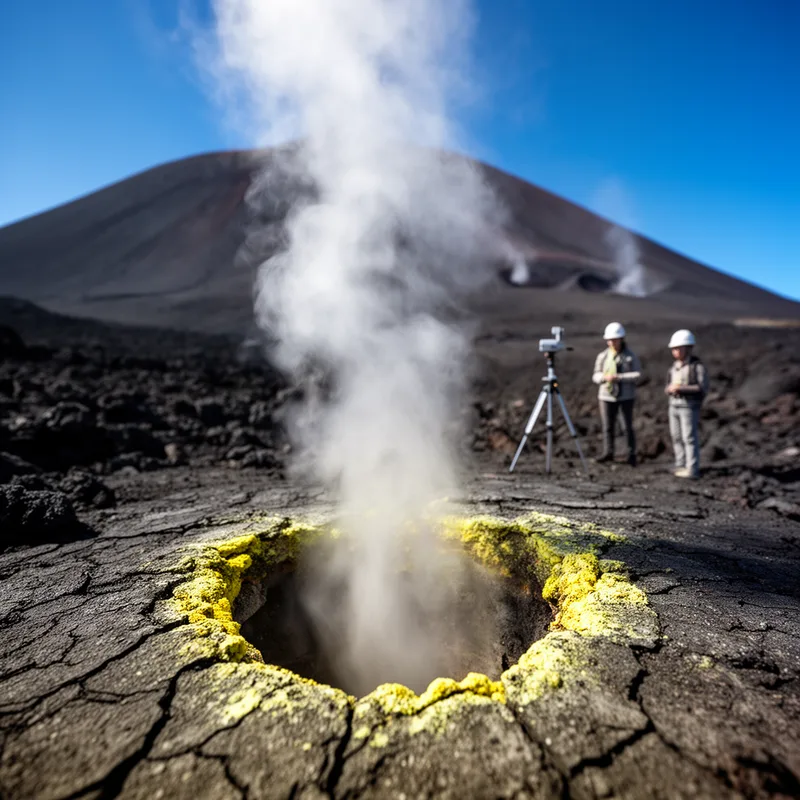
fumarole
 1
9.9

- noun
- /ˈfjuːməˌroʊl/
- Specialized
- At Yellowstone National Park, visitors can see a fumarole releasing hot steam and sulfur gases from the ground.
- fumaroles and mud
- fumaroles and mud pots
Examples
-
The fumaroles at the volcano's summit are fascinating; they emit bursts of steam as the pressure builds beneath the surface.
-
Thermal energy within the earth approaches the surface in many different geologic formations: volcanic eruptions, geysers, fumaroles, and mud pots.
Academic text (1994) -
With so much steam, the fumarole must be big.
Fiction book (2001) -
Also, I learned that the fumarole can give out deadly gases.
Academic text (1990) -
Then, as they forced their way west, past the hissing fumaroles,
Fiction book (1991) -
Through steam fumaroles, mud pots, and geysers, heat from the interior of the Earth reaches the surface.
Academic text (1991) -
The fumaroles near the peak were among the last small vestiges of Shasta's volcanic glory.
Fiction book (1991) -
Yellowstone National Park preserves the most extraordinary collection of mudpots, geysers, hot springs, and fumaroles on Earth.
Academic text (2009) -
During our hike, we encountered a fumarole where steam and gas escaped, creating a mesmerizing display of natural geothermal activity.
Synonyms
 157
2.7
An opening in clothing like the back of a jacket that lets air in
 1
6.3
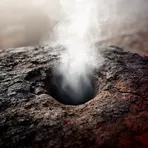
A hole that lets gas escape from rock or metal
 1
6.5
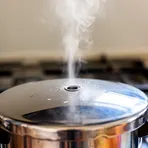
A small hole that lets gas or air escape
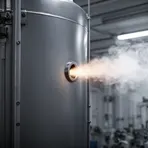
A hole that lets air or gas escape from a closed space
How Active

Surface Forms
Etymology
Fumarole comes from the Latin fumare, meaning 'to smoke', and is related to the English word fume. Think of the ground 'smoking' as steam and gas come out of an opening near a volcano; that is what a fumarole is.