
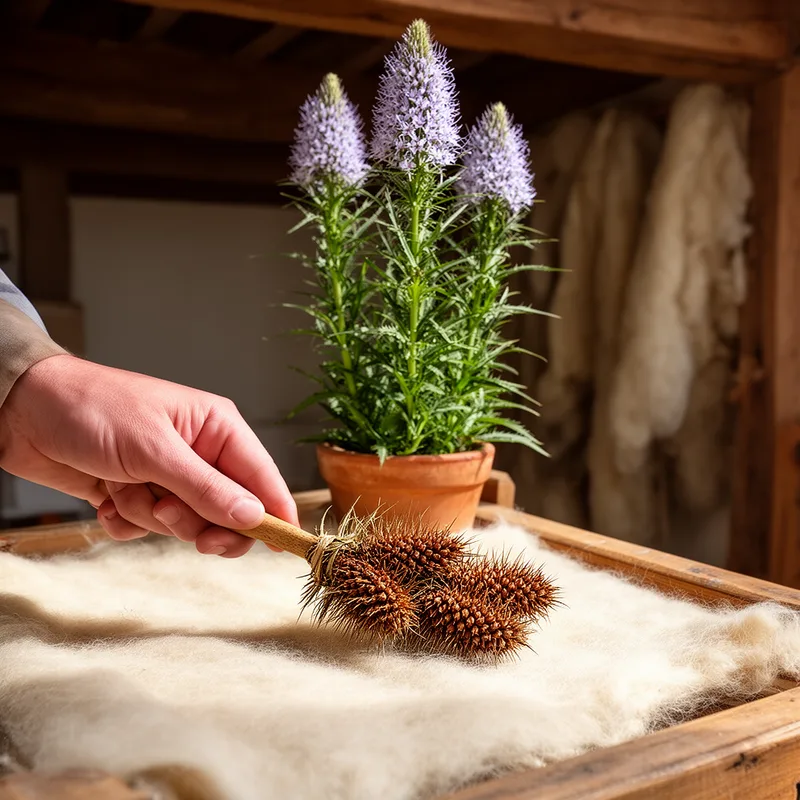
fuller's teasel
- noun
- /ˈfʊlərz ˈtiːzəl/
- Specialized
- The dried flower heads of the fuller's teasel were once commonly used in woolen mills.
Examples
-
In medieval Europe, fuller's teasel played a vital role in the cloth finishing process.
-
Gardeners sometimes plant fuller's teasel for its distinctive prickly appearance and wildlife value.
-
The fuller's teasel is often found in wildflower meadows.
-
Many fuller's teasels grow along the riverbank.
-
In medieval Europe, fuller's teasel played a vital role in the cloth finishing process.
-
The dried flower heads of the fuller's teasel were once commonly used in woolen mills.
-
Gardeners sometimes plant fuller's teasel for its distinctive prickly appearance and wildlife value.
Synonyms


 1
9.9
A tall prickly plant with spiny flower heads used to brush wool
 1
9.9
A tall plant with lilac spiky flower heads used to brush wool cloth

A prickly plant with spiny flower heads once used to roughen wool cloth

A prickly plant with lilac flowers and spiky dried heads used by weavers to finish wool cloth

A prickly wild plant with round flower heads used in dried flower arrangements
Surface Forms
Morphology
fuller's + teasel
The phrase is a possessive compound: 'fuller's' (a person who fulled cloth) + 'teasel' (a spiny plant). If a B1 learner knows both constituents, they can readily infer it denotes the teasel associated with or used by fullers (i.e. the variety used to raise the nap on cloth); the composition follows a common, transparent noun+noun/possessive pattern even if 'fuller' is somewhat archaic.
Etymology
Fuller's teasel is named after the cloth worker fuller because its dried, spiky flower heads looked like small combs and were used to brush wool and lift the fibers to make the cloth soft. That's why the name refers to a prickly plant once used to finish wool cloth.