
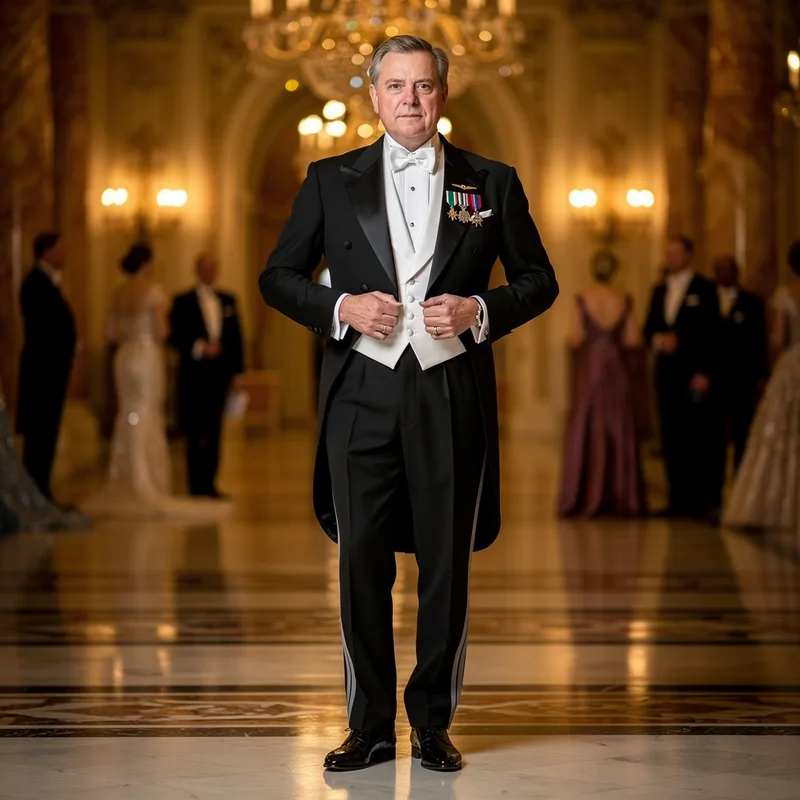
full dress
 1
6.8
1
6.8

- noun
- /fʊl drɛs/
- Formal
- He simply sat in the leather wing chair and stared at the dictator, who looked splendid in his full-dress military uniform with all the medals and the sash of office crossing his proud chest.
- full dress uniform
- wearing full dress
- guys in full dress
Examples
-
Officers and men look resplendent in full dress uniform.
-
The other was a magnificent marine sergeant, six foot three or four, in full-dress uniform.
Fiction book (1995) -
Your father wants you in full dress before the Emperor's Herald arrives.
-
In full dress uniform, Vanderhorst was the instantaneous center of attention when he, Jemma, and Korry entered.
Fiction book (1997) -
Only 600 tickets were allotted, but thousands, thousands lined the streets and rooftops, citizens, senators, congressmen, diplomats, officers, all in their full dress uniforms.
-
In a funeral procession that draws on traditional Chinese culture as well as present-day police decorum, the men and women who serve and protect parade down the small Chinatown street in full dress blues.
Fiction book (1999) -
He looked incredibly sharp in his full dress suit at the gala.
-
The guests were required to wear full dress for the formal dinner event.
-
During the ceremony, everyone appeared in full dress, showcasing the grandeur of the occasion.
Synonyms
 3
3.6
3
3.6
Clothes for special events in the evening, like suits or long dresses
 3
3.8
3
3.8
Clothes worn for formal evening events, like a suit or long dress
 2
8.2
2
8.2
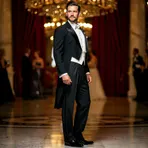
A very formal men's suit with a coat that has a long back worn at special events
 2
7.0
2
7.0
A very formal men's evening dress code requiring a white bow tie and tailcoat
 1
4.2
1
4.2
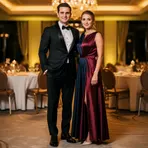
Clothes worn for formal evening events like dinners or parties
 1
8.1
1
8.1
A very formal evening outfit for men with a white bow tie, white waistcoat, black tailcoat, and matching trousers


 1
3.5
1
3.5
A formal men's outfit with a tailcoat and trousers for evening events
Formal clothes that men wear for special occasions like a suit or tuxedo
Antonyms

How Formal

Surface Forms
Morphology
The words 'full' + 'dress' plausibly signal a complete or formal set of clothing, so a learner knowing both words could guess it means a particular kind of dress/attire. However, the specific conventional sense—formal evening attire for men (tailcoat, waistcoat, etc.)—is narrower and culturally specific and not fully predictable from the parts alone, making the expression partially but not wholly transparent to a B1 learner.
Etymology
Full dress comes from military and royal clothes for parades and ceremonies. The idea is a complete set of formal items — full meaning complete and dress meaning clothes — often with medals or a tailcoat, so it now means 'formal evening attire'.