

frequency response


 1
6.9
1
6.9
- noun
- /ˈfriːkwənsi rɪˈspɒns/
- Specialized
- We kick these over to the lab to test though, and shockingly, the frequency response curve is not that far off our target.
- gain and frequency response
- frequency response of hearing aids
- adaptive frequency response
Loading YouTube…
Watch on YouTubeI guess frequency response would be the right word.
- I guess frequency response would be the right word.
Examples
-
Yes, but this one has a 45% improvement in dynamic range and frequency response.
-
The engineer analyzed the frequency response to optimize the performance of the new amplifier.
-
OK, so what's the frequency response of this system?
-
And the the idea is to be able to draw the frequency response almost by inspection.
-
The shaped noise signal is used to determine the frequency response of the hearing aid while these changes take place.
Academic text (1990) -
Thus, the frequency response appears to emphasize low frequencies as the input level is increased.
Academic text (1990) -
OK, so that's the frequency response of this echo channel.
-
The solid line is the target frequency response; the dashed line is the simulation.
Academic text (1990) -
Figure 5 depicts the frequency response of the system for several loads.
Academic text (1995) -
The measurements thus give an accurate indication of the frequency-response behavior of the hearing aid.
Academic text (1990)
Synonyms
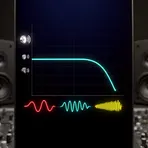
A graph showing how loudness changes across low and high tones

A graph that shows how loud a speaker or amplifier is at different frequencies
Surface Forms
Morphology
The phrase is compositionally built: it denotes the 'response' of a system as a function of 'frequency', so a learner who knows 'frequency' and 'response' can infer it refers to how a system reacts across different frequencies. Although the term is technical and may require domain knowledge for full precision, the basic meaning is directly derivable from the constituents and mirrors constructions found in other languages.
Etymology
The term frequency response comes from how people test machines: they send tones at different pitches (the frequency) and watch how loudly or weakly the machine answers (its response). So, it means 'how a system reacts to different pitches'.