
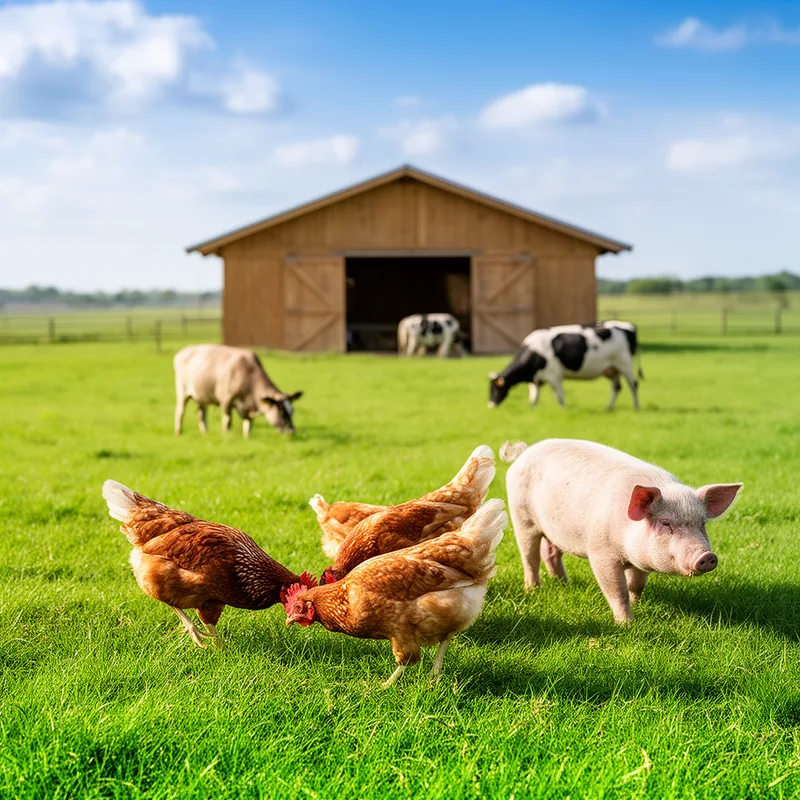
free-range farming
- noun
- /friː reɪndʒ ˈfɑːrmɪŋ/
- Many consumers prefer meat produced through free-range farming due to concerns about animal welfare.
Examples
-
The restaurant sources its eggs from free-range farming to ensure the hens have a natural lifestyle.
-
The government introduced incentives to support free-range farming initiatives across the country.
-
Debates continue about the environmental impact of free-range farming compared to more intensive systems.
-
Many people prefer free-range farming for ethical reasons.
-
Is free-range farming better for animal welfare?
-
Many consumers choose products from free-range farming because they believe it is better for animals.
-
Advocates argue that free-range farming improves the quality of meat and eggs by allowing animals to roam outdoors.
How Free


Surface Forms
Morphology
The meaning is directly and compositionally derived from 'free-range' (animals allowed to roam outdoors) modifying 'farming' (the activity of raising animals/crops), so a B1 learner who knows both constituents will understand it refers to farming where animals roam freely rather than being confined. This is a straightforward, literal compound pattern common across languages and therefore easily comprehensible.
Etymology
Free-range farming comes from the simple idea that animals are free to move across open ranges or fields instead of being kept inside. So it means a way of farming where animals can roam outdoors rather than being kept inside.