
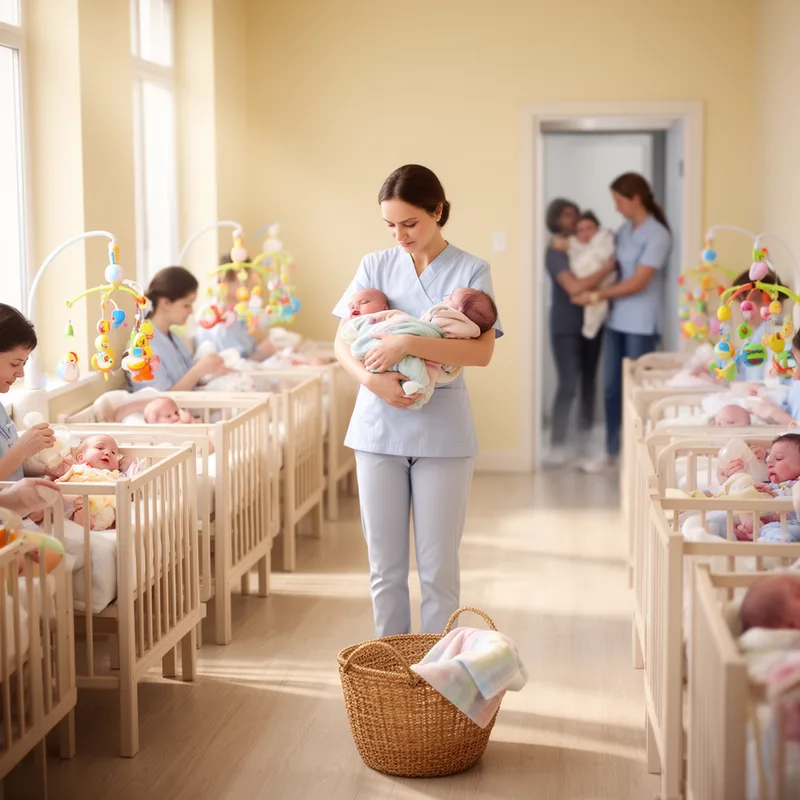
foundling hospital
- noun
- /ˈfaʊndlɪŋ ˈhɒspɪtl/
- Archaic
- Visiting the foundling hospital, she learned about the challenges faced by children without families.
Examples
-
Many foundling hospitals throughout history have offered refuge to vulnerable children.
-
The foundling hospital provided care and safety for infants abandoned by their parents.
-
In other words, foundling hospitals were in a sense predecessors of, or an alternative to, technical fertility control, and they did involve a redistribution of "surplus" children from those who did not need them to those who could make them economically advantageous.
Academic text (1993) -
According to her reasoning, the foundling hospitals of eighteenth- and nineteenth-century Europe were part of a mechanism that removed "surplus" children from "households that did not need them and could not afford to raise them." Those children who survived to an age "at which they could be economically useful to a household were assigned to foster families." 68
Academic text (1993)
Synonyms

 ∞
1.0
∞
1.0

A large building where sick or injured people get medical care
 168
2.8
168
2.8
A home where children who have no living parents are cared for
A place where abandoned newborn babies are taken and cared for
Surface Forms
Morphology
The compound directly combines 'foundling' (an infant found and cared for by others) with 'hospital' (a facility for care), so the overall meaning—an institution caring for foundlings—is transparently derived from its parts. This is a regular noun–noun compounding pattern common across languages, so a B1 learner who knows both constituents would readily understand it.
Etymology
The noun foundling hospital comes from the word foundling, meaning a baby who was 'found' after being 'left', and hospital, a place that cares for people. Picture a baby left at a door who is then found and taken into a building to be looked after, and you can see why the phrase means 'a place for abandoned infants'.