
fossil oil
- noun
- /ˈfɑsəl ɔɪl/
- Specialized
- The refinery processes fossil oil to produce various fuels and chemicals.
Examples
-
Many industries rely on fossil oil as a primary source of energy.
-
It looks and smells like petrol, but it's a much cleaner and clearer product than petrol derived from fossil oil.
Blog text (20) -
After drilling deep underground, workers extracted fossil oil from ancient marine deposits.
Synonyms

 100
4.4
100
4.4

A thick dark liquid found under the ground that people use to make fuels like gasoline and diesel
 66
5.5
66
5.5
Oil taken from the ground before it is made into fuel
 47
3.4
47
3.4
A thick black oil from under the ground used to make fuel

A dark thick oil found underground used for fuel and making products
Surface Forms
Morphology
The phrase is directly compositional: 'fossil' (remains of ancient organisms) combined with 'oil' (hydrocarbon liquid) yields the obvious meaning of oil derived from ancient organic matter. This straightforward noun-noun combination follows common adjectival/compound patterns and is cross-linguistically transparent, so a B1 learner who knows both words can infer the meaning.
Etymology
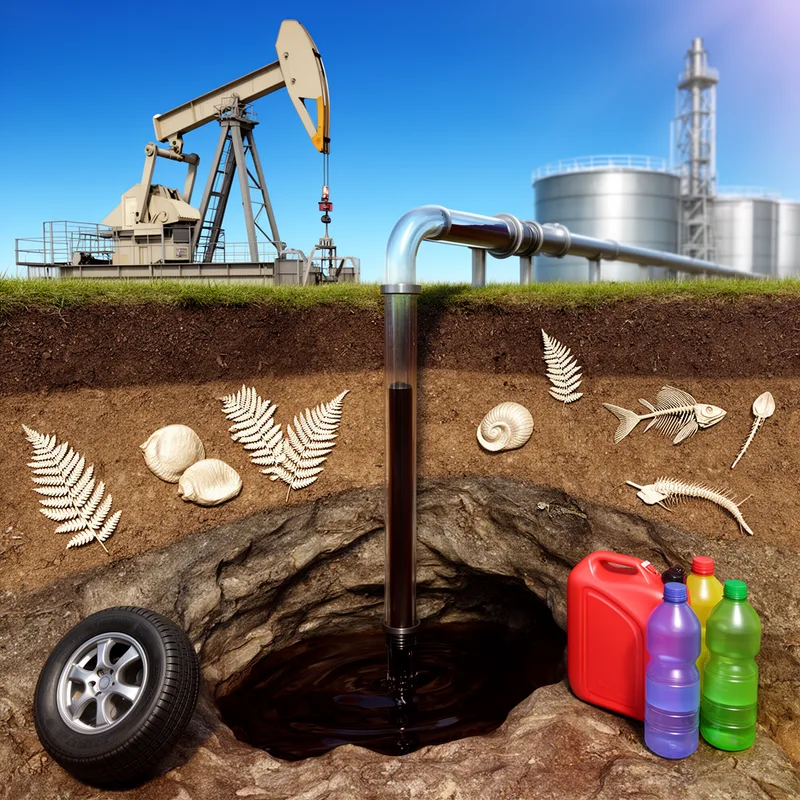
Fossil oil comes from the simple image of ancient plants and animals buried under the ground that, over millions of years, slowly turned into oil, and the word fossil points to its origin in old life. So, the name shows this oil comes from dead living things and explains why we burn it as a 'fuel'.