
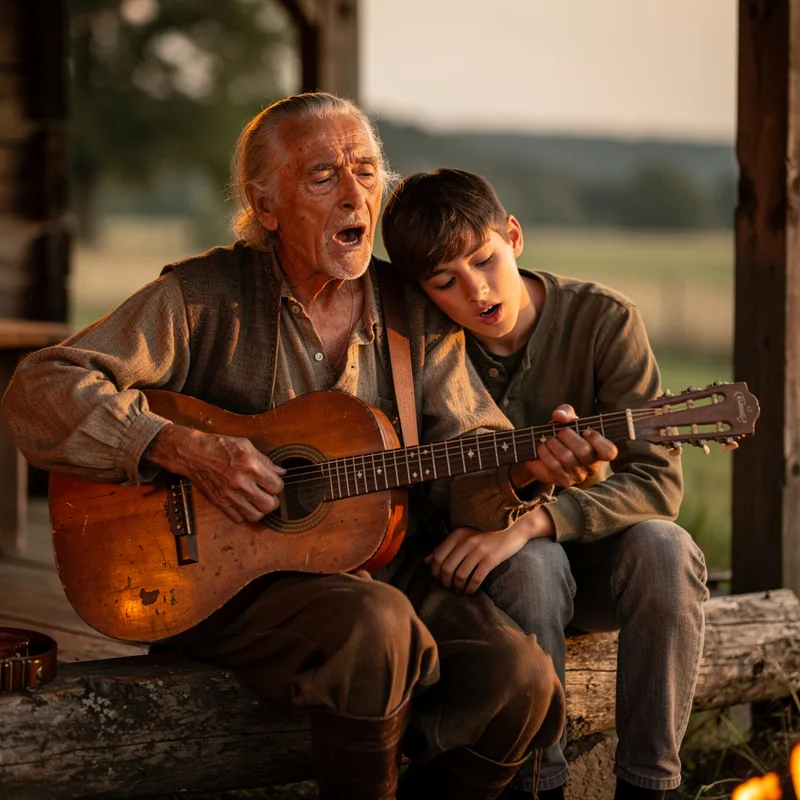
folk song
 11
2.2
11
2.2

- noun
- /foʊk sɔŋ/
 :
canción folclórica
:
canción folclórica
- Music by Vivaldi and a rhythmic Irish folk song stimulated different responses from the children.
- Hungarian folk song
- traditional folk songs
- Korean folk songs
And it goes on for a number of verses after that, as most folk songs do.
- And it goes on for a number of verses after that, as most folk songs do.
- And I thought and we, we were mostly updating folk songs and bringing in friends from the neighborhood who included West Indian babysitters that I'd met.
- And we will write a folk song about your ass, then serve you a boiled meat.
- And I thought and it we, we were mostly updating folk songs and bringing in friends from the neighborhood who included West Indian babysitters that I had met.
Examples
-
Because children learn primarily through play, folk songs with accompanying finger plays and games provide an ideal repertoire.
Academic text (1999) -
The name "Arirang" simply refers to a group of Korean folk songs that have been orally passed down for generations.
Academic text (2013) -
The first step is to have students study a folk song they already know.
Academic text (1997) -
Invite students to create a longer folk song that tells a story.
Academic text (1997) -
I loved the sound of her voice when she sang me the Indian folk song.
-
The band students clearly enjoyed the folk song, especially when they learned the translated lyrics.
Academic text (2013) -
Parker has arranged hundreds of folk songs for the Robert Shaw Chorale.
Academic text (1994) -
I collect folk songs.
-
At the recorder center, they worked on two new folk songs with challenging rhythms.
Academic text (2011) -
The villagers gathered around the fire to sing a traditional folk song that told stories of their ancestors.
Synonyms


 1
3.0
1
3.0
A song passed down in a community that tells their stories and beliefs
 1
3.5
1
3.5
A traditional story song sung by ordinary people about love or history
How Traditional
11
2.2

Surface Forms
Morphology
The meaning 'a traditional song passed down among the people' is directly and compositionally derived from 'folk' (relating to the people or traditional culture) + 'song' (a musical piece with lyrics). This is a common, literal compound pattern found across languages, so a B1 learner who knows both constituents would readily infer the MWE meaning.
Etymology
The noun folk song comes from village life, where ordinary folk, meaning people, gathered to sing a song about work, love or local history. Because these tunes were learned by ear and handed down, 'folk song' now means 'a traditional song of a community'.