
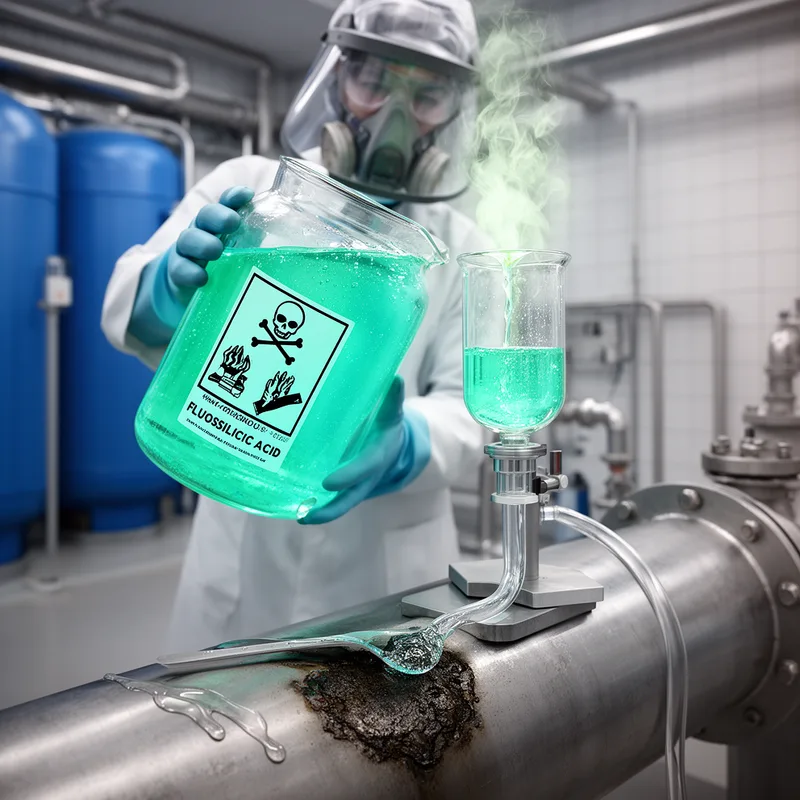
fluosilicic acid


 1
9.9
- noun
- /ˌfluːoʊsɪˈlɪsɪk ˈæsɪd/
- Specialized
- Workers must handle fluosilicic acid with care due to its corrosive nature.
Examples
-
It's the industrial waste from the fertilizer industry and the aluminum industry that are the true horrors, things like sodium fluoride and the highly toxic fluosilicic acid.
Blog text (6) -
Some of these contain not only fluoride derivatives, but fluosilicic acid contains high levels of arsenic.
Blog text (6) -
Adding fluosilicic acid to drinking water helps improve dental health.
-
In electroplating, fluosilicic acid is used to enhance the adhesion of the metal coating.
Synonyms
 1
9.9
A strong poisonous acid people use to add fluoride to water and to make chemicals
Surface Forms
Morphology
The compound is a straightforward adjective+noun chemical name: 'fluosilicic' (pertaining to silicon–fluorine compounds) + 'acid' yields an acid composed of those elements, so the basic meaning (an acid of silicon and fluorine) is directly derivable. Although technical and rare, this follows regular chemical naming patterns that are cross-linguistically transparent, so a learner who knows the constituents can infer the MWE's meaning.
Etymology
Fluosilicic acid comes from its parts: fluo means 'fluorine' or 'fluoride' and silicic means 'silicon'. So the name literally says it is an 'acid' with those elements, which is why it is very strong and can damage metal and skin if not handled carefully.