
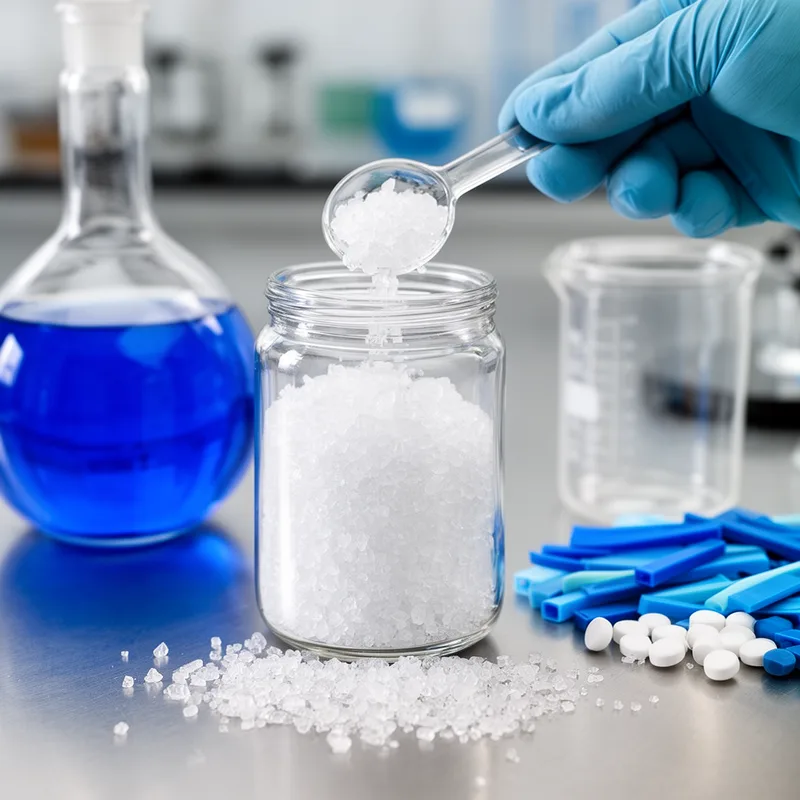
fluorene


 1
9.5
- noun
- /ˈflʊəˌriːn/
- Specialized
- Researchers found that fluorene can be utilized to create various chemicals in the laboratory.
Examples
-
Fluorene is commonly used in the production of fluorene dyes and plastics due to its unique properties.
-
Nearly 100% of urinary samples collected through NHANES contain metabolites of naphthalene, fluorene, phenanthrene, and pyrene (Huang et al. 2006; Li et al. 2008).
Academic text (2014) -
Estrogenic activity was also reported for 2-fluorene and 1-pyrene (Schultz and Sinks 2002).
Academic text (2014) -
In the study, the effects of fluorene on synthetic materials were tested to assess its benefits.
Surface Forms
Morphology
fluorene = fluor + ene
The form consists of the chemical combining form 'fluor' plus the technical suffix '-ene'; this is specialised chemical nomenclature and not transparently interpretable by a B1 learner from the component forms.
Etymology
Fluorene joins fluor-, a chemical part you meet in fluoride and fluorescent, with -ene, a word ending used for simple carbon chemicals like ethylene. So fluorene is a small carbon molecule used to make dyes, plastics, and other materials.