

flintlime brick
- noun
- Specialized
- When renovating historic buildings, matching the original flintlime brick can be a challenge.
Examples
-
Unlike traditional clay bricks, flintlime brick is known for its smooth surface and light shade.
-
The old factory was constructed using flintlime bricks that gave the walls a distinctive pale color.
-
The architect chose flintlime brick for its durability.
-
Can you believe how light flintlime bricks are?
-
The old factory was constructed using flintlime bricks that gave the walls a distinctive pale color.
-
Unlike traditional clay bricks, flintlime brick is known for its smooth surface and light shade.
-
When renovating historic buildings, matching the original flintlime brick can be a challenge.
Synonyms
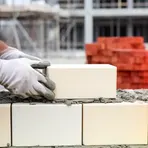
A type of brick made from sand and lime used for building

A brick made from sand and lime instead of clay, usually light gray and used for building
Surface Forms
Morphology
flintlime + brick
The noun 'brick' is transparent, but the modifier 'flintlime' is a specialized, non‑standard compound not found in general dictionaries. If a learner can decompose it into common roots like 'flint' and 'lime' they can infer a brick made with those materials rather than clay, but this requires technical knowledge of construction materials and morphological decomposition beyond typical B1 vocabulary. Because some inference is possible but not fully predictable for an average B1 learner, the expression is only partially transparent.
Etymology
Flintlime brick: The name flintlime brick comes from the two materials used to make it: hard flint-like sand and white lime, instead of clay. That literal picture of sand plus lime explains why the term means a pale, smooth brick often seen on older buildings today.

