
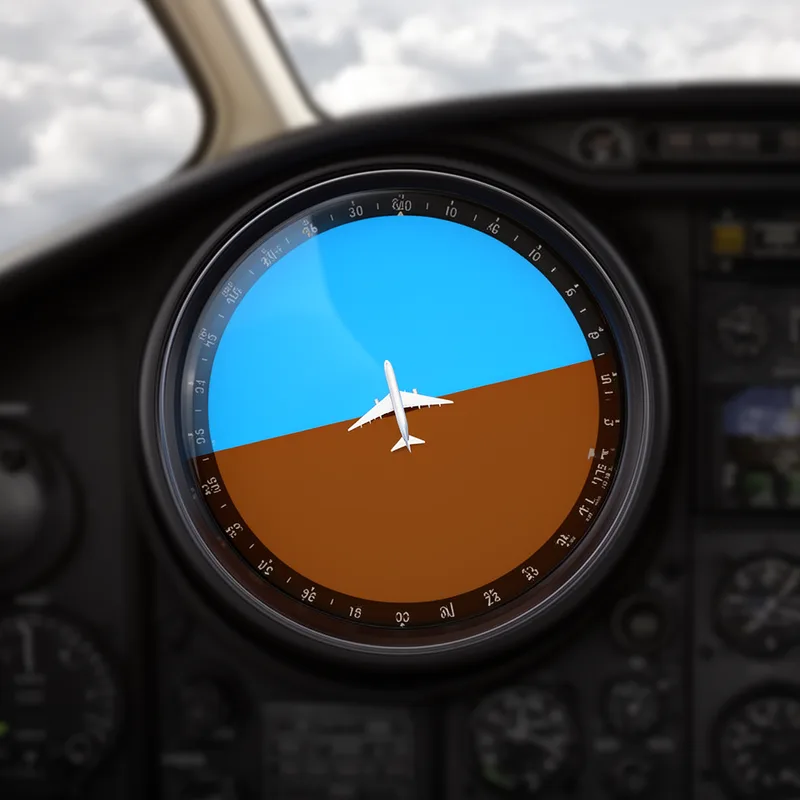
flight indicator
- noun
- /flaɪt ˈɪndɪˌkeɪtər/
- Specialized
- The flight indicator helped the pilot stay oriented during heavy clouds.
Examples
-
Many pilots rely on the flight indicator during bad weather.
-
The flight indicator showed that the plane was level.
-
Modern flight indicators are often digital rather than mechanical.
-
When the flight indicator malfunctioned, the co-pilot referenced backup instruments.
-
The flight indicator showed the pilot that the aircraft was ascending smoothly.
-
Pilots often glance at the flight indicator to ensure they maintain proper altitude.
-
When flying at night, the flight indicator is crucial for navigation in the absence of landmarks.
Synonyms



 1
5.7
1
5.7
An instrument in a plane that shows whether it is level or tilted

An aircraft instrument that shows the plane's angle to the horizon using a spinning device
How Informative

Surface Forms
Morphology
The compound 'flight indicator' is partially transparent because combining 'flight' (relating to flying) with 'indicator' (something that signals) yields a general idea of an instrument that shows flight-related information. However, the specific technical sense—an artificial horizon or gyroscope-based attitude instrument—is specialised and not predictable from the constituents alone, so a B1 learner would grasp a broad idea but not the precise function without domain knowledge.
Etymology
Flight indicator began as a simple spinning device like a top that stays level, so it could show the plane's position when the real horizon was hidden. So the name joins flight and indicator because it literally 'indicates' the plane's 'tilt' in flight, meaning it tells the pilot how the plane is angled.