

flag smut fungus
- noun
- /flæɡ smʌt ˈfʌŋɡəs/
- Specialized
- The flag smut fungus can devastate wheat crops if not controlled.
Examples
-
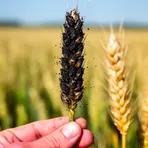
Signs of flag smut fungus include dark streaks on leaves and stems.
-
Researchers developed resistant varieties to protect fields from flag smut fungus.
-
The flag smut fungus can severely damage wheat crops.
-
Farmers are concerned about flag smut fungi affecting their barley.
-
Farmers are warned that flag smut fungus can spread quickly through their fields.
-
Identifying flag smut fungus early can help prevent extensive damage to cereal crops.
-
To combat flag smut fungus, experts recommend regular monitoring of grass and cereal plants.
Synonyms


 1
9.4
1
9.4
A plant disease that makes black powder on grain plants like wheat

A disease of wheat and other grasses that makes dark powdery streaks on leaves and stems

A disease caused by a fungus that makes dark powdery spots on grain plants
Surface Forms
Morphology
The phrase is fully compositional: 'smut' denotes a fungal disease and 'fungus' names the organism, while 'flag' identifies the host plant, so the whole expression clearly denotes a fungus that causes smut on flag (or flag-leaf) plants. This is a literal, non-idiomatic naming of a plant disease and therefore predictable for a B1 learner who knows the constituent words.
Etymology
Flag smut fungus may come from the sight of black, dusty smut covering the plant's top flag leaf and stems, so the leaves look dark and damaged. That's why the name refers to a fungus that makes black patches of spores and can harm cereal crops.