
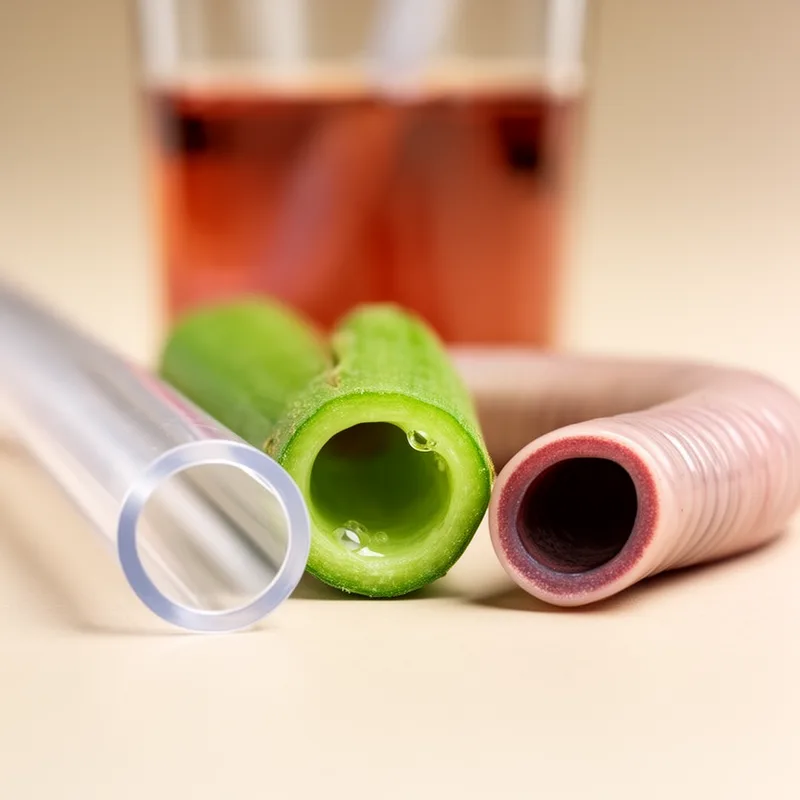
fistulate
- adjective
- /ˈfɪstjʊlɪt/
- Specialized
- The plant's stem is fistulate, allowing fluids to pass through its center.
Examples
-
The plant has fistulate stems that help it survive in dry conditions.
-
The straw is fistulate, making it ideal for sipping liquids.
-
Certain worms have a fistulate body adapted for burrowing in mud.
-
These fistulate structures are crucial for the plant's nutrient transport.
-
Certain worms have a fistulate body that allows them to burrow efficiently through mud.
-
The plant's fistulate stem facilitates the movement of water and nutrients from the soil.
-
The fistulate shape of the straw makes it especially effective for sipping beverages.
Synonyms

Hollow and shaped like a reed

A plant stem or body part that has a hollow tube inside like a thin pipe
Surface Forms
Morphology
Etymology
The word fistulate comes from the Latin fistula, which means 'pipe' or 'tube', like a drinking straw. So something that is fistulate is hollow and tube-shaped, allowing liquids or air to pass through.

