

fish louse
- noun
- /fɪʃ laʊs/
- Specialized
- A single fish louse can cause severe irritation and damage to its host.
Examples
-
The salmon farm had to be shut down due to a fish louse infestation.
-
Biologists studied the effects of the fish louse on different species of freshwater fish.
-
The fish louse can cause serious harm to its host.
-
Many aquarists are concerned about fish lice in their tanks.
-
The salmon farm had to be shut down due to a fish louse infestation.
-
Biologists studied the effects of the fish louse on different species of freshwater fish.
-
A single fish louse can cause severe irritation and damage to its host.
Synonyms
 1
9.9
1
9.9

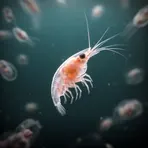
A very small water animal like a tiny shrimp that swims in plankton or lives on fish
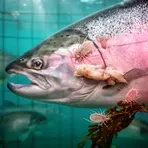
A small sea animal that lives on fish and sometimes eats dead plants or animals

A small animal that lives on fish in aquariums and harms them
Surface Forms
Morphology
The meaning is directly compositional: 'fish louse' denotes a louse (a parasitic organism) associated with fish, so a learner who knows 'fish' and 'louse' can infer it. This follows a standard modifier+noun pattern common across languages; even if 'louse' often evokes mammals or birds, the phrase transparently signals a parasite that lives on fish.
Etymology
The noun fish louse is a literal name: the words fish and louse create the image of a tiny parasite clinging to a fish and feeding on its skin or blood. That's why it means 'a small parasite that attaches to fish and feeds on them'.