
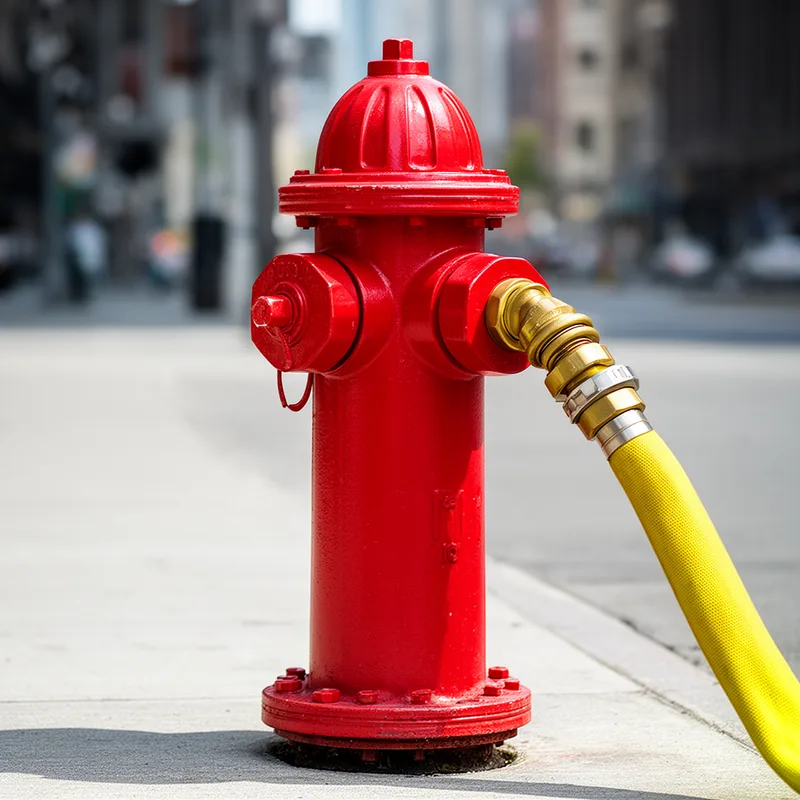
fire hydrant
 15
2.1
15
2.1

- noun
- /ˈfaɪər ˈhaɪdrənt/
- Minna pulled the van to the curb at a fire hydrant on the corner of Bergen and Hoyt.
Loading YouTube…
Watch on YouTubeShe hits her head on an NYC fire hydrant and dies.
- She hits her head on an NYC fire hydrant and dies.
- Dude jumped and hit, literally landed right onto a fire hydrant that was in somebody's yard, man.
- So when you turn every fire hydrant plus every citizen's got their garden hose on pretty soon.
- It's kind of like how California tried solving fire hydrant theft.
- They can pee with one leg up on fire hydrants.
- And out of nowhere just bam, out of the pitch black, a fire hydrant.
Examples
-
I parked near a fire hydrant.
-
Okay, make sure you take him past his favorite fire hydrant.
-
It's more like parking in front of a fire hydrant.
-
At my corner fire hydrant
-
- Left at the fire hydrant.
-
Park it over there by the fire hydrant.
-
We need fire hydrants to fight fires.
-
You parked next to a fire hydrant.
-
The cop car stopped at the next corner, pulled over, and idled beside a fire hydrant.
Fiction book (2001) -
The firefighters quickly connected their hoses to the fire hydrant to put out the blazing fire.
Synonyms
 42
3.4
42
3.4
A pipe with a tap that gives water for firefighters to attach hoses
 2
6.2
2
6.2
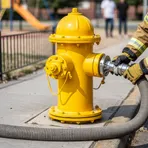
A short pipe in the street where firefighters connect hoses to get water
Surface Forms
Morphology
The compound meaning is directly and transparently derived from 'fire' (the purpose) + 'hydrant' (a valve/pipe for firefighting water); the phrase simply names a hydrant used for fires. This noun+noun composition follows a common and predictable pattern and is cross-linguistically regular, so a B1 learner who knows both constituents would readily infer the meaning.
Etymology
Fire hydrant comes from putting together fire and hydrant; a hydrant is a street device that 'gives water'. So picture a tall pipe where firefighters attach a hose to 'put out fires'—that's why it means 'a pipe that provides water for fighting fires'.