

finis
 3
9.9
3
9.9

- noun
- /ˈfɪnɪs/
- Archaic
- The novel ended with the word finis to signal its conclusion.
- finis operis
Examples
-
Now Christmas will be kaputski, done, over, finito, finished, finis!
-
It's all finis!
Fiction book (1994) -
Disappointed though she was, Elaine was not ready to write finis to this union.
Fiction book (1995) -
It's over, finis.
-
"I thought the Reverend Jones spelled finis to that in Guyana."
Fiction book (1993) -
Declinism has always oscillated between projection and prophecy, between those who cheer and those who fear finis Americae.
Academic text (2009) -
North Korea's nuclear defiance wrote an embarrassing finis to Koizumi's attempt to jump-start Japan-DPRK normalization by meeting with North Korean leader Kim Jong Il in September 2002.
Academic text (2003) -
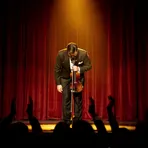
As the curtain fell, the director announced finis to mark the end of the performance.
-
Many consider the final installment of the series to be a fitting finis to the enchanting tale.
Synonyms
 ∞
1.0
∞
1.0
The final part of something, like an event or story
 398
1.0
398
1.0
The final part of something, like an event, story, or relationship
 273
1.6
273
1.6
The end of an event, period, or activity
 180
3.6
180
3.6
The last, most exciting part of a show or event
 167
2.2
167
2.2
The last part of an event, activity, or piece of writing
 39
1.0
39
1.0
The final part of an event or activity
 13
3.5
13
3.5
The last part of something, especially a period or event
 10
6.0
10
6.0
A short section at the end of a book or play that tells what happens after the story
 6
9.9
6
9.9
The end of an activity or event
 1
3.1
1
3.1
A time when an activity or event ends


 1
3.9
1
3.9
The place or moment when something finishes

A short part at the end of a book or play that finishes the story
Antonyms


Surface Forms
Etymology
Finis comes from the Latin finis, which means 'end', and it is the same root behind English words like final, finish, and finite. So when you see finis at the end of a film or manuscript, it simply signals 'the end'.