
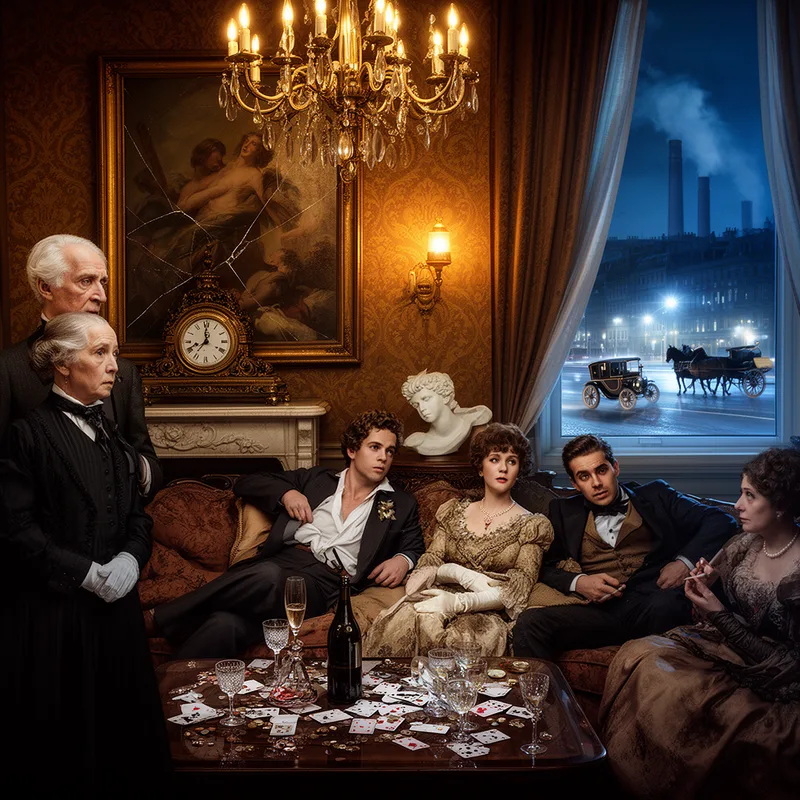
fin-de-siècle


 1
9.9
1
9.9
- adjective
- /fæn də ˈsiːkl/
- Literature
- My passion for fin-de-siècle Vienna resulted in a sequence on the painter Gustav Klimt.
- fin-de-siècle Vienna
Examples
-
The city's fin-de-siècle strutting does have a shameless streak.
Academic text (2008) -
The fact that the Viennese—indeed, Austrian—identity is so interwoven with the fin-de-siècle epoch has more than aesthetic implications.
Academic text (2008) -
The fin-de-siècle fixation is, to be sure, played up for tourists.
Academic text (2008) -
Same slather, all black and rich and opulent in this fin-de-siècle way.
Fiction book (1995) -
"Fin-de-siècle Vienna was infatuated with contemporary artists, not former generations of creative pioneers.
Academic text (2008) -
What greater fortune could befall an American intellectual in this decadent fin de siècle?
Academic text (1991) -
Emerge from the subway, and in all likelihood, the sign announcing your stop will be the handiwork of fin-de-siècle architect Otto Wagner.
Academic text (2008) -
The sense of contemporaneity is largely an illusion; the derangements of the last fin-de-siècle are quite different from those of this, and so also are our ways of coping.
Academic text (1999) -
Munch's iconography reflects the contemporary fin-de-siècle version of the ideology of "Woman" as man's unknowable and erotic opposite.
Academic text (2000) -
The artwork at the gallery captures the essence of a fin-de-siècle mindset, reflecting both beauty and decay.
Synonyms
 37
3.9
37
3.9
A period of years around the start of a new century, about ten years before and after
 1
9.9
1
9.9
A period at the end of a century, especially the late 1800s, with a mood of decline
Surface Forms
Etymology
Fin-de-siècle is a French phrase made of fin 'end', de 'of', and siècle 'century', so it literally means 'end of the century' and you can remember fin like 'finish'. That's why fin-de-siècle is used for the late 1800s when people felt big cultural change and a sense that old ways were coming to an end.