

field bindweed
- noun
- /fiːld ˈbaɪndwiːd/
- Specialized
- Gardeners often struggle to remove field bindweed from their vegetable patches.
Examples
-
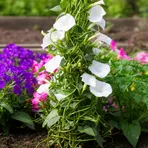
The pink and white flowers of field bindweed are deceptively attractive despite its invasive nature.
-
The garden was overrun by field bindweed.
-
The rapid spread of field bindweed poses a major problem for local farmers.
-
Many farmers struggle with field bindweed in their fields.
-
The garden was overrun with field bindweed, making it difficult for other plants to thrive.
-
Farmers often struggle to control field bindweed due to its invasive nature.
-
She noticed the field bindweed spreading rapidly across her flower beds this spring.
Synonyms


 1
7.9
1
7.9
A fast growing climbing or creeping plant with white funnel shaped flowers that smothers other plants

A climbing plant with white or pink flowers that lives many years and grows as a common weed

A climbing or spreading plant with trumpet-shaped flowers
Surface Forms
Morphology
The meaning — a type of bindweed associated with or growing in fields — is directly and transparently derived from combining 'field' (a plot of land) with 'bindweed' (a twining invasive plant). This noun+noun compounding pattern for naming plants is cross-linguistically common and follows regular English composition, so a B1 learner who knows the constituents would readily infer the MWE meaning.
Etymology
Field bindweed gets its name from the way its long stems bind or wrap around other plants in the field. Because it spreads and harms crops people call it a 'weed', so the name shows both how it looks and why it's a problem.