
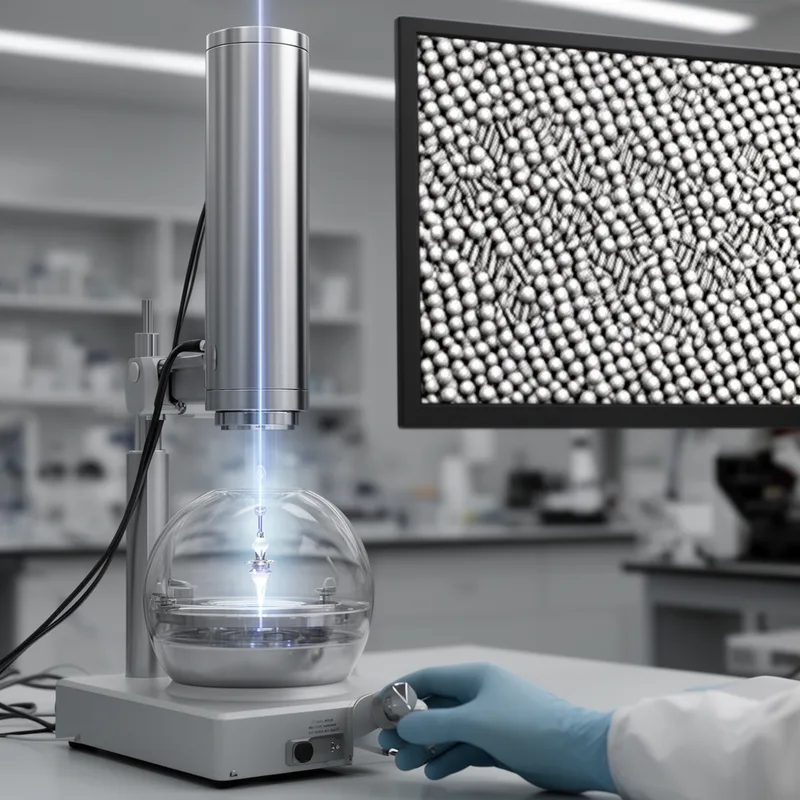
field-emission microscope
- noun
- /fiːld ɪˈmɪʃən maɪˈkrɒskoʊp/
- Specialized
- Researchers used a field-emission microscope to study the surface defects of a new semiconductor.
Examples
-
The cold field emission microscope eliminates the conventional electron source that illuminates the sample.
Academic text (2000) -
The field-emission microscope provides incredibly detailed images of materials at the atomic level.
-
The advanced field-emission microscope allowed scientists to visualize the intricate structures on the metal's surface.
Surface Forms
Morphology
field-emission + microscope
The compound follows a transparent structural pattern ('X microscope' = a microscope that uses X), so a learner who knows 'microscope' plus the words 'field' and 'emission' could infer it is a microscope that involves some kind of 'field emission'. However, 'field emission' is a specialized physics term (electron emission under a strong electric field) not derivable from everyday senses of 'field' and 'emission', so a B1 learner would at best form a vague approximation rather than the precise technical meaning.
Etymology
Field-emission microscope is named for how it makes images: a strong field or electric push makes tiny particles called 'electrons' come out, which is the emission, and those electrons are used by the microscope to show very small details on a surface. So the name means a microscope that uses 'electrons' given out by an electric field to see things too small for ordinary light.

