
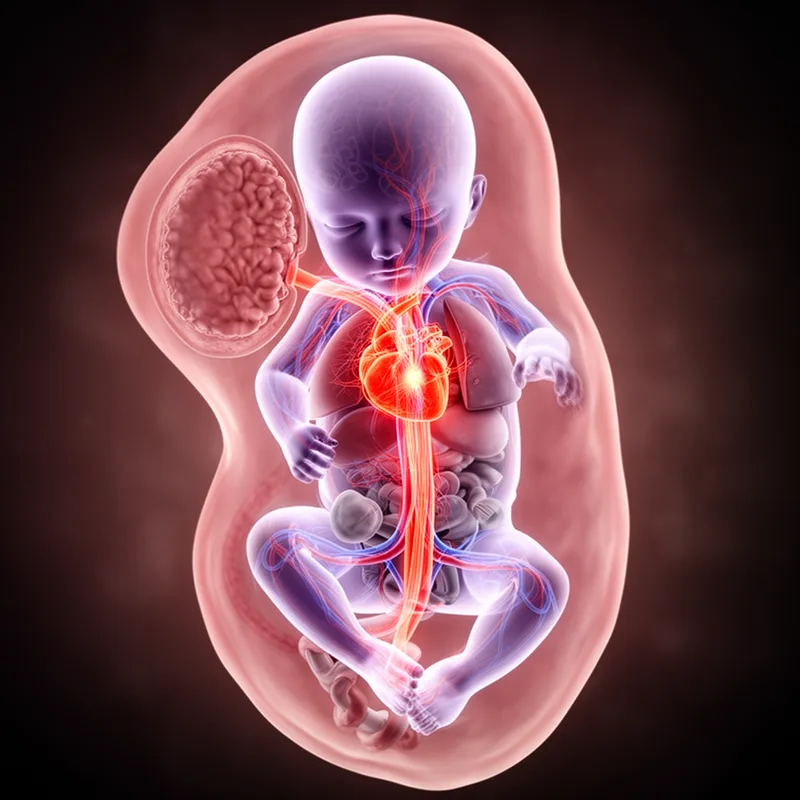
fetal circulation
- noun
- /ˈfiːtəl ˌsɜːrkjʊˈleɪʃən/
- Specialized
 :
circulación fetal
:
circulación fetal
- The doctor had already sketched a diagram showing how the lungs refused to process oxygen and how the baby had reverted to a type of breathing that she'd been doing in the womb—persistent fetal circulation.
Examples
-
Abnormalities in the fetal circulation can lead to serious complications in the developing fetus.
-
Such studies have diagnostic potential in disorders of the fetal circulation and deserve closer attention from clinicians.
Academic text (1991) -
S-nitrosohemoglobin in the fetal circulation may represent a cycle for blood pressure control.
Academic text (2002) -
Maternal cells and maternal DNA have been described in cord blood and in the fetal circulation of healthy individuals.
Academic text (2003) -
The placenta plays a crucial role in supplying oxygen through the fetal circulation during pregnancy.
-
Healthcare providers monitor the fetal circulation closely to ensure the baby is receiving adequate nutrients.
Surface Forms
Morphology
The meaning 'system of blood vessels and structures directing blood flow in a developing fetus' is directly derivable from combining 'fetal' (pertaining to a fetus) and 'circulation' (blood flow). This adjective+noun composition is technically specific but transparently compositional and has clear equivalents in other languages, so a B1 learner who knows the constituents would understand it.
Etymology
Fetal circulation describes the special paths blood takes in a baby before birth. Because the baby gets oxygen from the mother's placenta instead of using its lungs, blood uses shortcuts like the foramen ovale and the ductus arteriosus to reach the heart and body, so fetal circulation means the unique way blood flows 'before birth'.

