
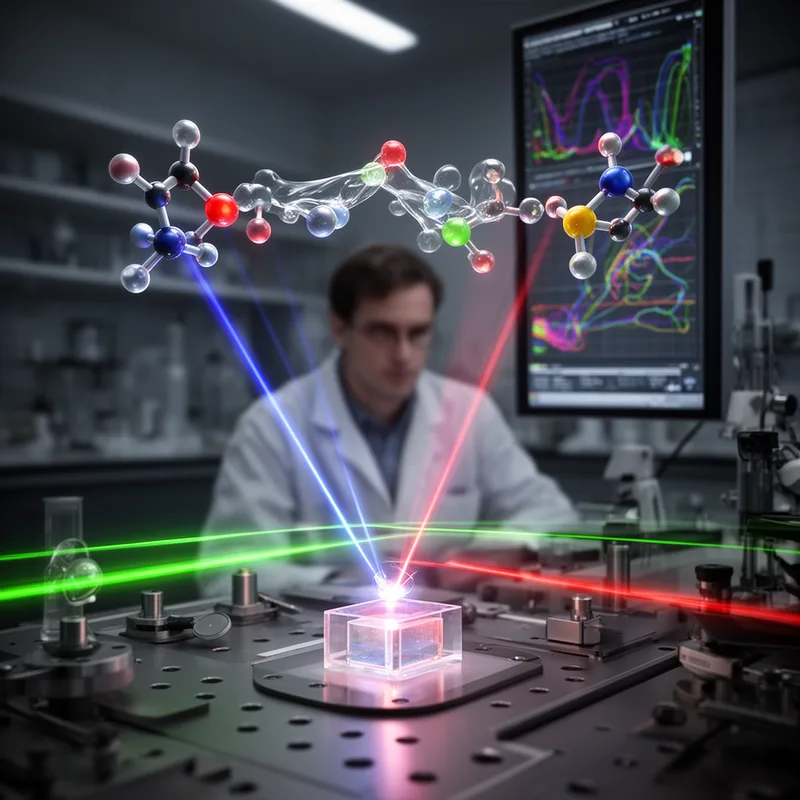
femtochemistry


 1
9.9
- noun
- /ˌfɛmtoʊˈkɛmɪstri/
- Specialized
- The study of femtochemistry has revolutionized our understanding of rapid molecular processes.
Examples
-
In a 1988 experiment, (n3) Zewail and coworkers gave a striking demonstration of how femtochemistry can elucidate the dynamics of such a fundamental molecular system.
Academic text (1999) -
Femtochemistry allows scientists to observe femtochemistry as they occur in just a few femtoseconds.
-
Molecular beam techniques became crucial to the evolution of femtochemistry in Zewail's laboratory.
Academic text (1999) -
There's an important symbiosis between the theoretical calculations of these surfaces and their empirical investigation by femtochemistry and other experimental means.
Academic text (1999) -
That has made it possible for groups all over the world to apply femtochemistry to an incredible variety of systems—including biology and surface catalysis.
Academic text (1999) -
Research in femtochemistry is essential for developing new materials and improving chemical reactions.
Surface Forms
Morphology
Etymology
Femtochemistry is built from the prefix femto- meaning 'very, very small' or 'one millionth of a millionth' and chemistry meaning the study of substances. So, femtochemistry is the study of chemical changes that happen in an extremely short time.