
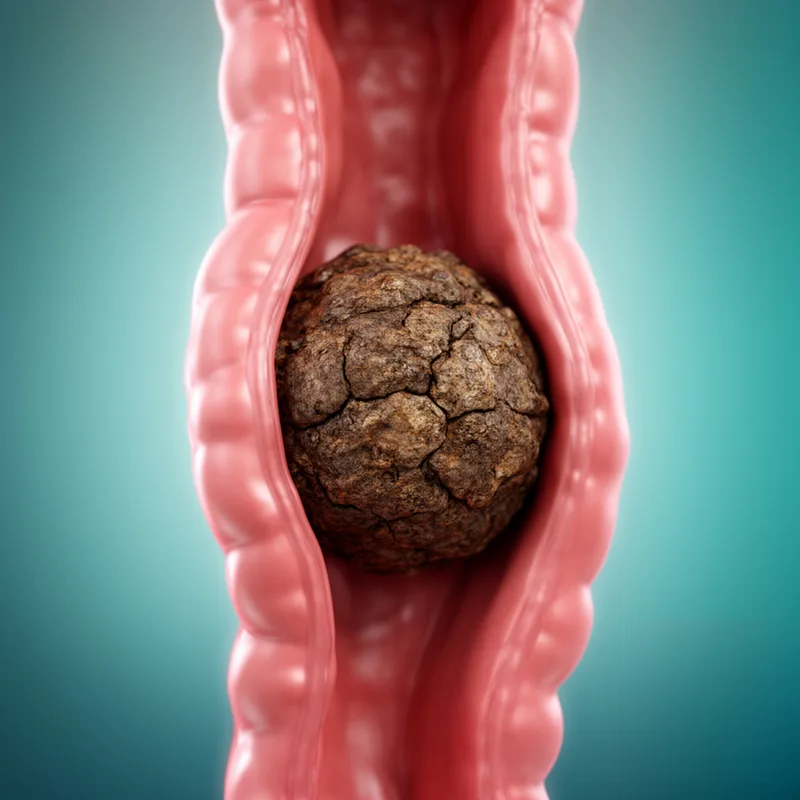
fecalith


 1
9.9
A hard piece of dried poop that can block the intestine
- noun
- /ˈfiːkəˌlɪθ/
- NSFW
:
fecalito
- The doctor explained that a fecalith can lead to severe abdominal pain if not treated.
Examples
-
Xanthogranulomatous appendicitis is usually an incidental finding in patients with chronic inflammation and obstruction by fecalith.
Academic text (2005) -
After the surgery, they removed a large fecalith that was blocking the patient's intestines.
-
Symptoms of a fecalith may include cramping and discomfort in the lower abdomen.
Synonyms

9.9
A hard lump of dried poo in the intestine that can block it
is the same idea but also highlights causing both blockage and discomfort
9.9
A hard mass of dried poop in the intestine or rectum
is similar but emphasizes a stone-like texture rather than simple dryness
9.9
A hard stone that forms inside the intestine and can cause a blockage
is specifically a mass of fecal matter that often causes blockage or discomfort
How Solid

Surface Forms
Morphology
Etymology
The word fecalith joins fecal (from 'feces', meaning 'body waste') and lith (an old word for 'stone', as in monolith). So a fecalith is literally a 'stone' of 'feces', which explains why it is hard and can block the bowel.