
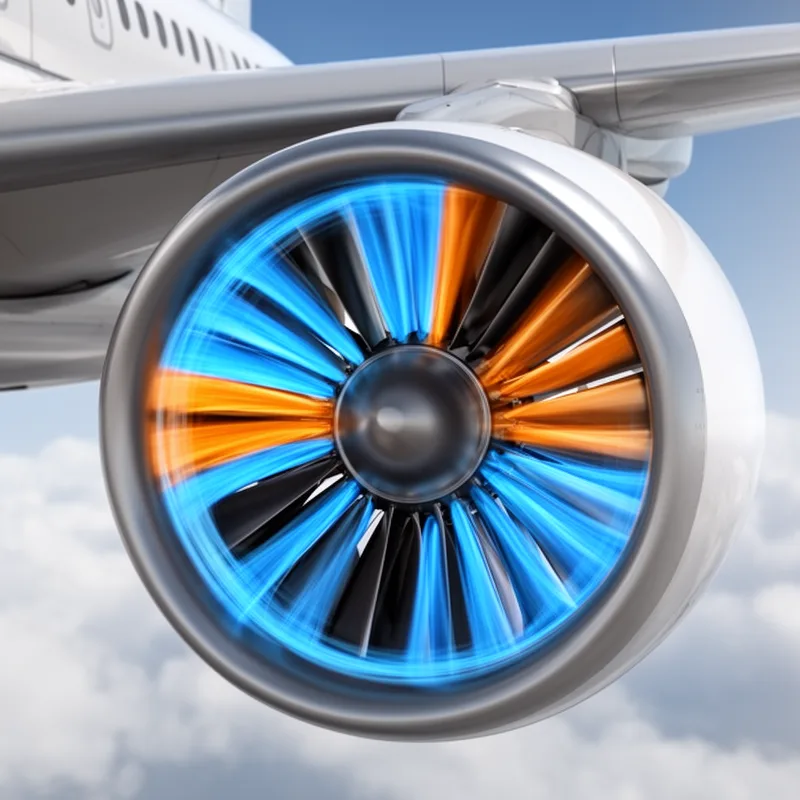
fanjet engine
- noun
- /ˈfænˌdʒɛt ˈɛnʤɪn/
- Specialized
- The fanjet engine provides greater thrust for large aircraft.
Examples
-
Most modern commercial aircraft use fanjet engines due to their superior fuel efficiency and noise reduction.
-
Engineers are continually working to improve the performance of the fanjet engine for future airliners.
-
The Boeing 747 is powered by four fanjet engines that enable it to fly long distances efficiently.
-
Many modern jets utilize a fanjet engine for improved performance.
-
The new airplane model is powered by a highly efficient fanjet engine that reduces fuel consumption.
-
Engineers are excited about the latest advancements in fanjet engine technology for commercial jets.
-
By using a fanjet engine, the aircraft can achieve greater thrust with less noise than traditional engines.
Synonyms

 14
3.7
14
3.7

An engine that pushes a plane by shooting out fast hot air
 1
3.5
1
3.5
A machine that gives power to a plane so it can fly
 1
6.1
1
6.1
A jet engine with a big fan that gives extra power and saves fuel on passenger planes


 1
5.1
1
5.1
A jet motor with a large front fan that pushes extra air to make the plane move forward

An engine with a large fan that pushes extra air to make the plane go faster

A jet engine with a large front fan, or a plane powered by it
Surface Forms
Morphology
The compound is directly compositional: 'fanjet' denotes a jet engine with a fan and 'engine' names the machine, so the phrase refers transparently to that type of engine. Although somewhat technical, a B1 learner who knows the constituent words can readily infer the meaning from their combination.
Etymology
The name fanjet engine comes from a simple image: a jet engine with a large fan at the front that pushes extra air into it, giving more push while using less fuel. That's why 'fanjet engines' are used on many airliners for 'better fuel use' and 'less noise'.