
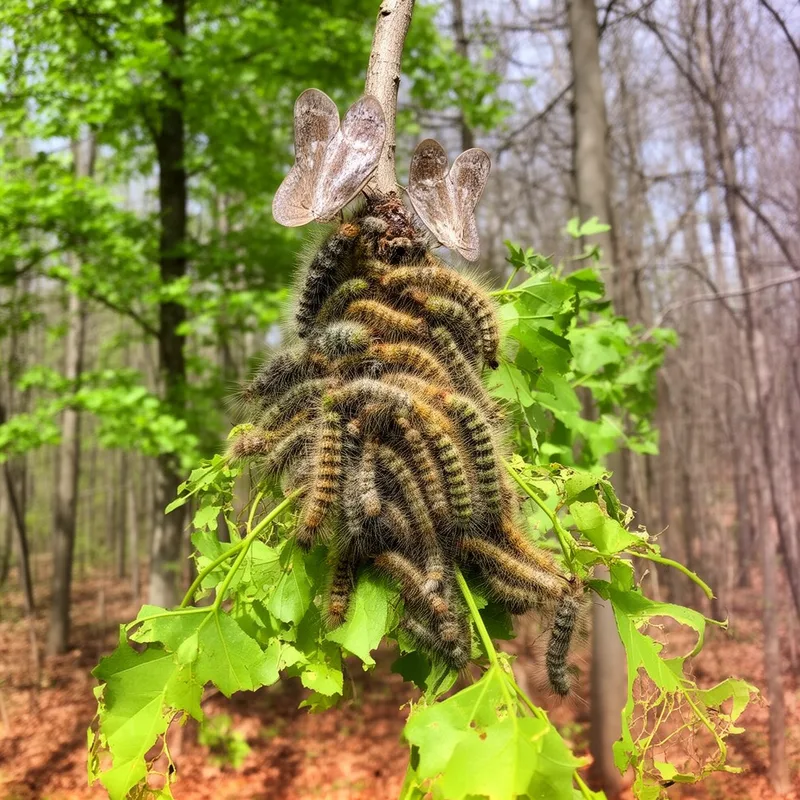
family Lymantriidae
- noun
- Specialized
 :
familia Lymantriidae
:
familia Lymantriidae
- The family Lymantriidae includes many species whose caterpillars can defoliate forests.
Examples
-
Several members of the family Lymantriidae are considered serious pests in agriculture and forestry.
-
Caterpillars from the family Lymantriidae can damage trees.
-
Scientists are studying the global spread of the family Lymantriidae and its ecological impact.
-
The family Lymantriidae includes many species of moths.
-
The family Lymantriidae is known for its caterpillars, which can be significant pests of various tree species.
-
Many species in the family Lymantriidae have caterpillars that are hairy and can cause severe damage to forests.
-
Researchers are focused on the family Lymantriidae due to its role as a pest in forest ecosystems.
Synonyms

A family of moths with hairy caterpillars that can irritate skin
Surface Forms
Morphology
The phrase is fully compositional: 'family' as a taxonomic grouping combined with the taxon name 'Lymantriidae' yields the meaning 'the family of moths called Lymantriidae'. This follows a regular scientific naming pattern common across languages, so a B1 learner who knows both constituents would readily understand the MWE.
Etymology
The noun family Lymantriidae comes from the moth genus Lymantria, a name given because these caterpillars often eat the leaves and can strip trees of foliage. So the name means a group of moths whose hairy caterpillars are known as serious 'pests'.

