
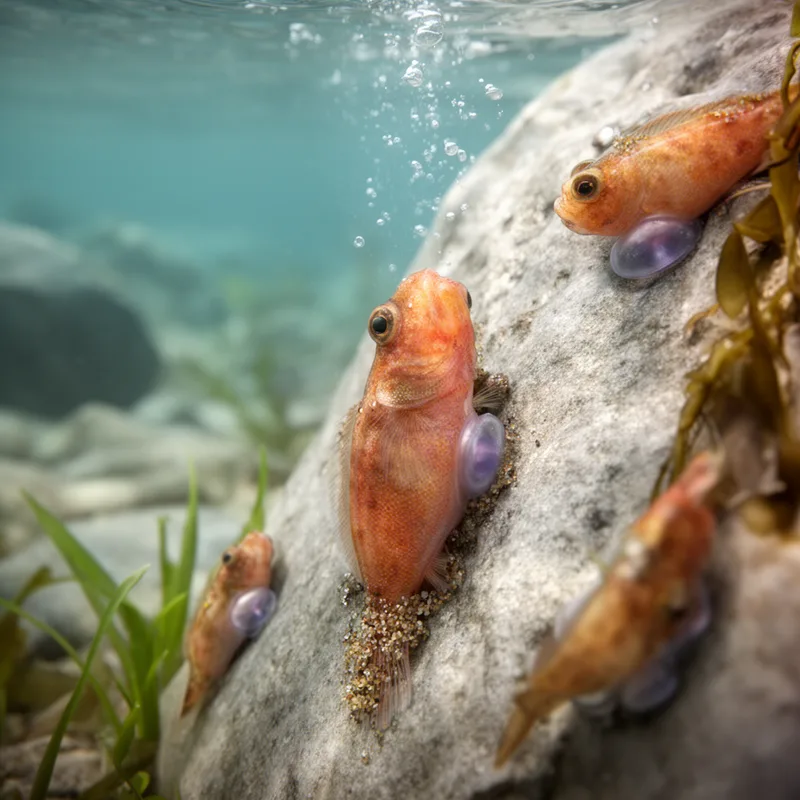
family Gobiesocidae
- noun
- /ˈfæmɪli ˌɡoʊbiˈsoʊsɪdeɪ/
- Specialized
- The family Gobiesocidae is known for its unique pelvic fins that form a suction disc.
Examples
-
Members of the family Gobiesocidae can cling tightly to rocks and seaweed in turbulent waters.
-
Many members of the family Gobiesocidae are found in rocky coastal habitats.
-
Marine biologists discovered a new species within the family Gobiesocidae near the coral reefs.
-
The family Gobiesocidae includes several species of clingfishes.
-
Marine biologists discovered a new species within the family Gobiesocidae near the coral reefs.
-
Members of the family Gobiesocidae can cling tightly to rocks and seaweed in turbulent waters.
-
The family Gobiesocidae is known for its unique pelvic fins that form a suction disc.
Synonyms
A family of small sea fish whose belly fins form a suction cup to hold them to surfaces
Surface Forms
Morphology
family + Gobiesocidae
This phrase is compositional: 'family' (a scientific grouping) combined with the taxonomic name 'Gobiesocidae' yields the meaning 'the family called Gobiesocidae'. Taxonomic naming conventions (family + Latin name) are cross-linguistically common, so a learner who knows both constituents or recognizes Gobiesocidae as a scientific name can derive the intended meaning easily.
Etymology
Family Gobiesocidae probably comes from goby (a small fish) plus a part that means 'to hold' or 'cling'. These fishes have a sucker-like fin that lets them stick to rocks and seaweed, so the name points to their habit of 'clinging' to surfaces.

