
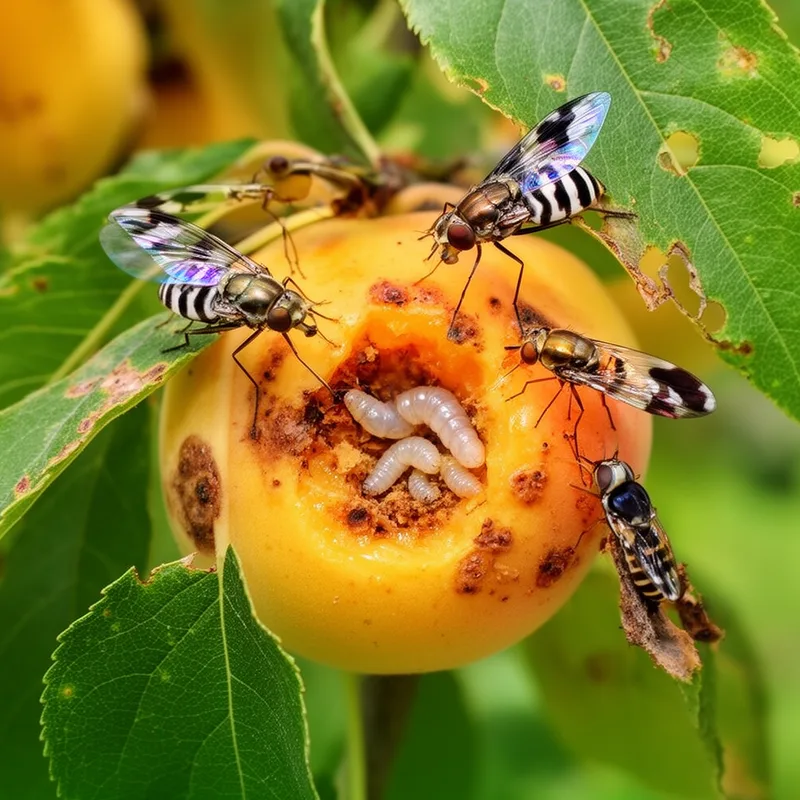
family Trypetidae
- noun
- /ˈfæmɪli traɪˈpɛtɪdeɪ/
- Specialized
- Several species in the family Trypetidae are significant agricultural pests due to the damage their larvae cause to fruit crops.
Examples
-
Some flies in the family Trypetidae are known for their brightly patterned wings.
-
The family Trypetidae includes many species of fruit flies.
-
Entomologists have reclassified many members of the family Trypetidae under Tephritidae, but the older name is still widely used.
-
Did you know that the family Trypetidae affects fruit crops?
-
Several species in the family Trypetidae are significant agricultural pests due to the damage their larvae cause to fruit crops.
-
Some flies in the family Trypetidae are known for their brightly patterned wings.
-
The family Trypetidae includes many species of fruit flies.
Synonyms


 1
9.9
A group of small fruit flies that often damage fruit and vegetable crops
A group of small flies that lay their eggs in fruit
A group of small fruit flies, some that eat leaves and harm fruit crops
Surface Forms
Morphology
This is a straightforward taxonomic noun phrase: combining 'family' (a scientific grouping) with the taxon name 'Trypetidae' yields the meaning 'the biological family called Trypetidae'. The construction follows a transparent, cross-linguistically common naming pattern (family + name), so a learner who knows both constituents can readily infer the meaning.
Etymology
Family Trypetidae may come from an old Greek word meaning 'borer', because many of these small flies have young that bore into fruit and make holes. That image of tiny flies making holes in fruit helps explain why the name is used for this group.