
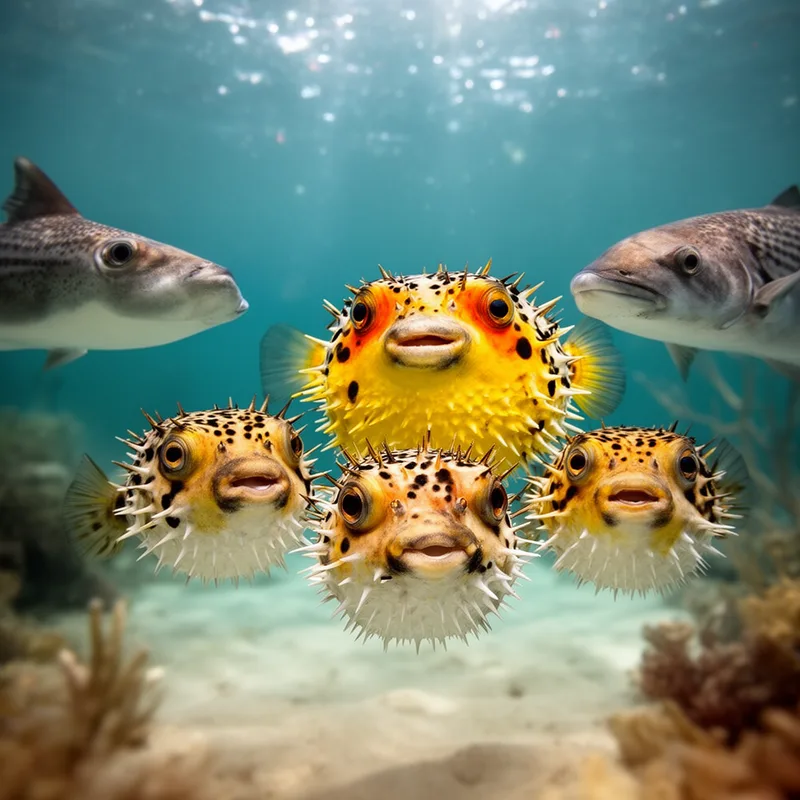
family Tetraodontidae


 1
8.6
- noun
- /ˈfæmɪli ˌtɛtrəˈɒndɪdi/
- Specialized
- Many species within the family Tetraodontidae can inflate their bodies to deter predators.
Examples
-
Many members of the family Tetraodontidae possess tetrodotoxin, making them highly poisonous if ingested.
-
The family Tetraodontidae includes various species of puffers.
-
Scientists study the family Tetraodontidae to understand adaptations to extreme environments in fish.
-
The family Tetraodontidae includes both freshwater and marine species known for their unique defense mechanisms.
-
Did you know that the family Tetraodontidae can inflate their bodies?
-
The family Tetraodontidae is known for its unique puffing behavior and toxic flesh.
-
Researchers have found that the family Tetraodontidae contains fascinating adaptations to avoid their predators.
Synonyms
 1
9.9
A family of fish like pufferfish that live in warm seas and can puff up and are often poisonous
Surface Forms
Morphology
The phrase is a straightforward taxonomic NP: the common noun 'family' (a scientific grouping) combined with the taxon name 'Tetraodontidae' yields the literal meaning 'the family called Tetraodontidae (puffer fishes)'. This composition follows regular naming patterns in biology and is cross-linguistically predictable, so a learner who knows both constituents will readily understand it.
Etymology
Family Tetraodontidae comes from the Greek parts tetra ('four') and odont ('tooth'), because these fish have four strong teeth joined into a beak. That's why the name points to this group of puffers that can inflate their bodies and are often poisonous.