

family Rhinolophidae
- noun
- /ˈfæmɪli raɪˈnɒləfɪdeɪ/
- Specialized
- The family Rhinolophidae is known for its unique horseshoe-shaped noseleafs, which help in echolocation.
Examples
-
The family Rhinolophidae includes more than seventy species of leaf-nosed bats found mainly in the Old World.
-
Researchers studied echolocation patterns in the family Rhinolophidae to understand how these bats navigate in darkness.
-
Members of the family Rhinolophidae are distinguished by their complex nasal structures.
-
The family Rhinolophidae includes several species of bats.
-
Many members of the family Rhinolophidae are found in Asia.
-
Researchers have identified over seventy species within the family Rhinolophidae across Africa and Asia.
-
Bats of the family Rhinolophidae are primarily found in Europe, where they play a crucial role in controlling insect populations.
Synonyms
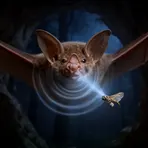
Bats with a horseshoe-shaped fold of skin on the nose that use sound to find things
Surface Forms
Morphology
The phrase is directly compositional: 'family' (a scientific grouping) combined with the taxon name 'Rhinolophidae' yields the literal meaning 'the family of Rhinolophidae bats.' Taxonomic naming conventions are regular and cross-linguistically familiar, so a B1 learner who knows both constituents can readily infer the MWE's meaning.
Etymology
The name family Rhinolophidae comes from parts like rhino meaning 'nose' and loph meaning 'crest', because these bats have a horseshoe-shaped noseleaf that helps them send and hear echoes. So the name points to their special nose and shows that this is the group of horseshoe bats.

