
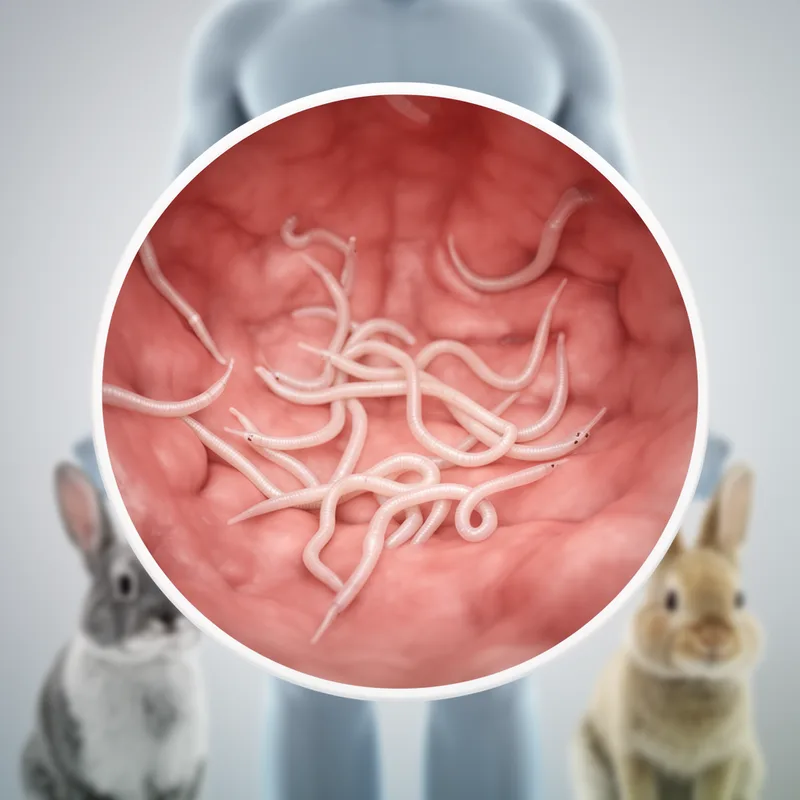
family Oxyuridae
- noun
- /ˈfæmɪli ˌɑkˈjʊrɪdeɪ/
- Specialized
- The family Oxyuridae includes several species of pinworms.
Examples
-
The family Oxyuridae includes species responsible for common parasitic infections in humans and animals.
-
The family Oxyuridae includes several genera that are commonly known as pinworms, often found in humans.
-
Researchers found several genera within the family Oxyuridae during their survey of the local wildlife.
-
The defining characteristics of the family Oxyuridae are their elongated bodies and pointed tails.
-
Many scientists study the family Oxyuridae for its impact on human health.
-
Many researchers specialize in the study of the family Oxyuridae to understand its role in parasitic infections.
-
In their research, scientists identified multiple unique traits within the family Oxyuridae, highlighting their importance in ecology.
Synonyms
A family of small parasitic worms like pinworms that live in the intestines of animals and humans
Surface Forms
Morphology
The phrase is fully compositional: 'family' denotes a taxonomic grouping and 'Oxyuridae' is the name of that taxon, so together they mean 'the family Oxyuridae (a group of related worms)'. This noun + proper-name construction is a standard, cross-linguistically common pattern, so a B1 learner who knows both constituent meanings can infer the MWE's sense (noting it is domain-specific biological vocabulary).
Etymology
Family Oxyuridae comes from old Greek words oxys ('sharp') and oura ('tail'), a simple picture of tiny worms with pointed tails. That's why the name is used for the group of small pinworms with long, narrow bodies and sharp tails.

