
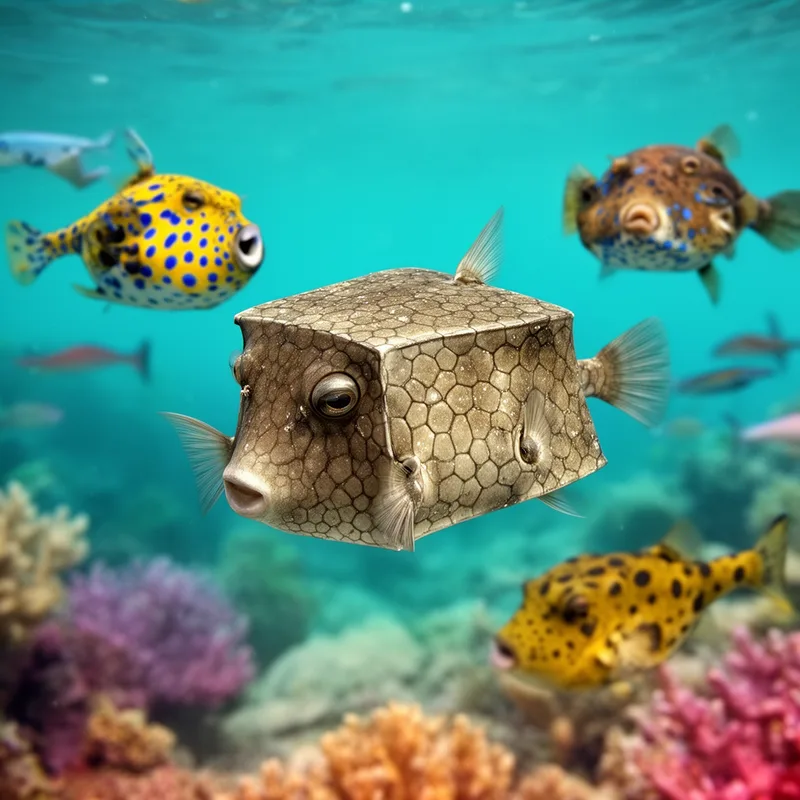
family Ostraciontidae
- noun
- Specialized
- Many aquariums feature species from the family Ostraciontidae because of their unique box-shaped bodies.
Examples
-
The family Ostraciontidae includes various species of boxfish.
-
The family Ostraciontidae is found in tropical and subtropical marine waters worldwide.
-
Scientists studied the defensive adaptations of fishes in the family Ostraciontidae.
-
Did you know that the family Ostraciontidae is known for its unique shape?
-
Many aquariums feature species from the family Ostraciontidae because of their unique box-shaped bodies.
-
The family Ostraciontidae is found in tropical and subtropical marine waters worldwide.
-
Scientists studied the defensive adaptations of fishes in the family Ostraciontidae.
Synonyms

A group of small sea fish with a hard, box-like body
A family of small tropical sea fish with box-shaped bodies and hard bony shells
Surface Forms
Morphology
family + Ostraciontidae
The structure is compositionally clear because 'family' signals a taxonomic grouping and combining it with a Latin family name indicates 'a family of organisms', so a learner can infer the phrase denotes a biological group. However, the specific content ('boxfishes') cannot be derived from the proper name Ostraciontidae without specialist knowledge of taxonomy or recognition of the suffix -idae, so the full meaning is not predictable to a general B1 learner.
Etymology
Family Ostraciontidae comes from the name Ostracion, which may come from a Greek word for 'shell' because these fish have a hard, box-like body. So the name refers to a 'family' of fish with a bony 'shell' covering most of their bodies.

