
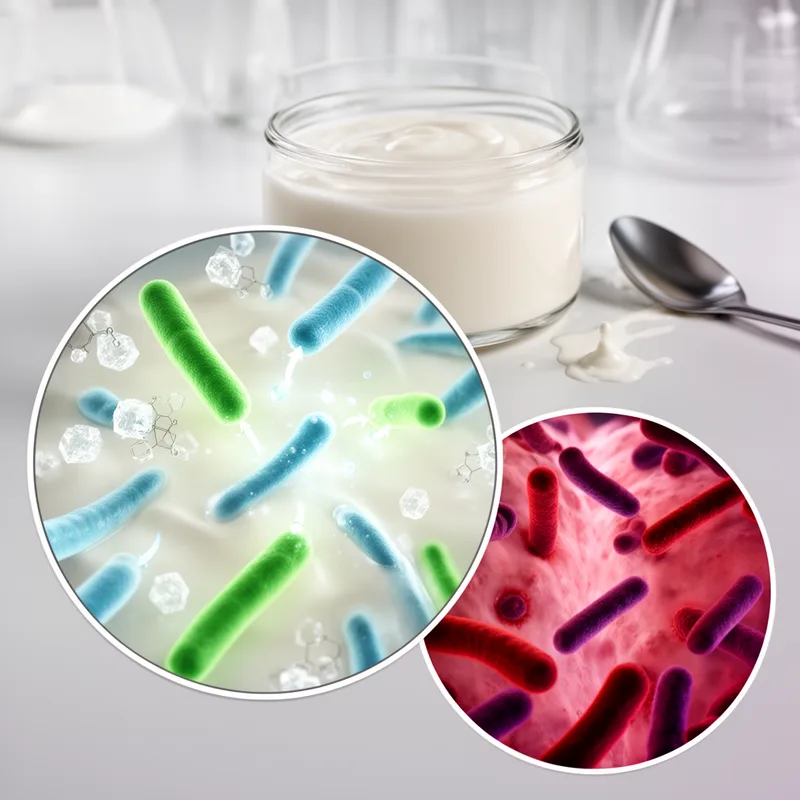
family Lactobacillaceae
- noun
- /ˈfæmɪli læktoʊbəˈsɪləˌsiː/
- Specialized
- The family Lactobacillaceae plays a key role in the fermentation of dairy products.
Examples
-
Many probiotic yogurts contain strains from the family Lactobacillaceae for their beneficial effects on digestion.
-
Some members of the family Lactobacillaceae are used in food production, while others can act as pathogens.
-
The family Lactobacillaceae includes many beneficial bacteria.
-
Research on the family Lactobacillaceae is crucial for understanding fermentation.
-
Many probiotic yogurts contain strains from the family Lactobacillaceae, which are known for their beneficial effects on digestion.
-
The family Lactobacillaceae includes important bacteria involved in the fermentation of dairy products and can also be pathogens.
-
Understanding the family Lactobacillaceae is essential for researchers studying the fermentation processes in the food industry.
Synonyms

A family of bacteria that turn sugars into lactic acid and include types that help make yogurt or cause disease
A family of bacteria that turn sugar into acid and are used in foods like yogurt and for gut health
Surface Forms
Morphology
The phrase combines the noun 'family' (a taxonomic grouping) with the taxon name 'Lactobacillaceae'; together they straightforwardly denote the taxonomic family of those bacteria. This is a regular, compositional scientific naming pattern common across languages, so a B1 learner who knows both constituents can reasonably infer the meaning.
Etymology
Family Lactobacillaceae comes from the parts lacto and bacillus, which mean 'milk' and 'small rod'. These are rod-shaped bacteria often found in milk and used to make yogurt, so the name helps you remember they are the 'milk' rods that change milk into yogurt.

