
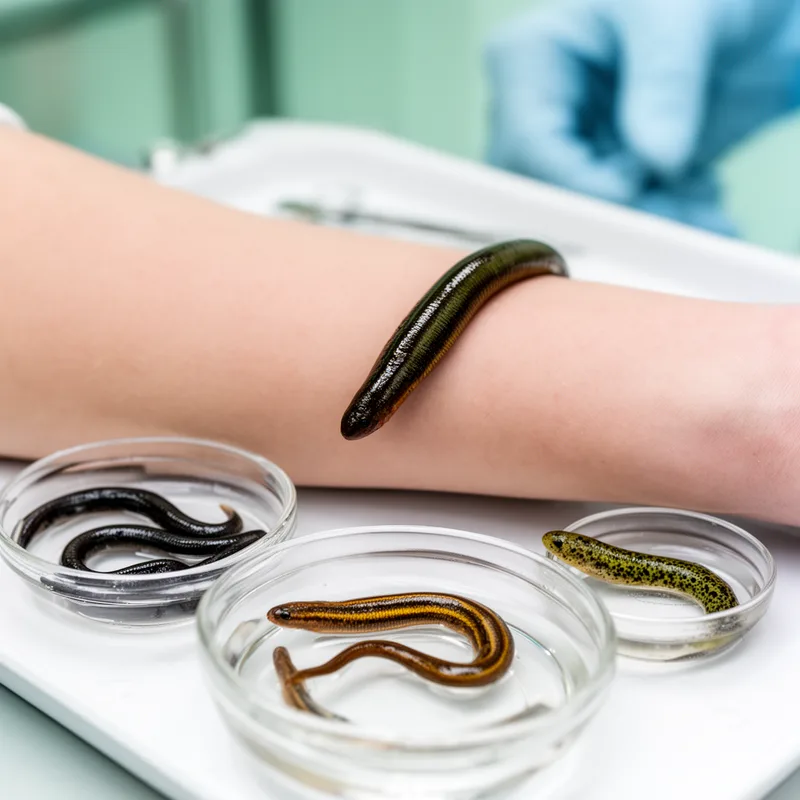
family Hirudinidae
- noun
- Specialized
- The family Hirudinidae includes the well-known medicinal leech used in clinical therapies.
Examples
-
Members of the family Hirudinidae are characterised by their ability to secrete anticoagulant substances.
-
Scientists discovered a new species belonging to the family Hirudinidae in freshwater habitats.
-
The family Hirudinidae includes the medicinal leech.
-
Many species belong to the family Hirudinidae.
-
The family Hirudinidae includes species that are commonly used in medical treatments.
-
Researchers are studying the family Hirudinidae to understand their unique properties in blood suction.
-
In the family Hirudinidae, the medicinal leech is famous for its therapeutic applications.
Synonyms

A family of leeches, some used in medicine to remove blood
Surface Forms
Morphology
The phrase combines the general noun 'family' (a taxonomic grouping) with the taxon name 'Hirudinidae' (a group of leeches), so its meaning — the taxonomic family of Hirudinidae leeches — follows directly from the constituents. This compositional pattern (rank + scientific name) is standard in biology and cross-linguistically common, so a B1 learner who knows both words would understand it.
Etymology
Family Hirudinidae comes from the Latin word hirudo, which means 'leech'. Think of it as a family: a group of related leech species including the medicinal leech that share traits like making a substance that keeps blood flowing, so the name tells us this group is all true leeches.

