
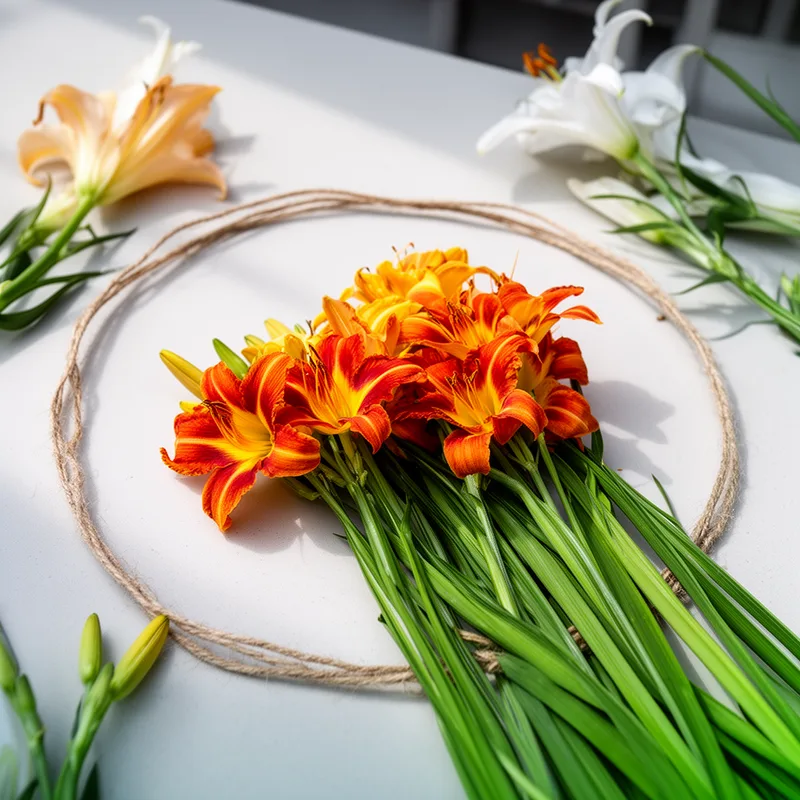
family Hemerocallidaceae
- noun
- /ˈfæmɪli ˌhɛmərəˌkælɪˈdeɪʃi/
- Specialized
- Some botanists separate Hemerocallis into the family Hemerocallidaceae rather than including it in Liliaceae.
Examples
-
Modern classifications often do not recognize family Hemerocallidaceae as distinct from the lily family.
-
The family Hemerocallidaceae is best known for the popular garden plant, the daylily.
-
The family Hemerocallidaceae includes many beautiful daylilies.
-
Many gardeners love the family Hemerocallidaceae for its vibrant flowers.
-
The family Hemerocallidaceae includes many species known for their colorful blooms and resilience in gardens.
-
Botanists often study the family Hemerocallidaceae to understand its relationship with other flowering plants.
-
In some classifications, the family Hemerocallidaceae is recognized as having distinct characteristics from the Liliaceae family.
Synonyms
A family of flowering plants that includes daylilies
Surface Forms
Morphology
The phrase is a straightforward taxonomic label: 'family' (a scientific grouping) combined with the proper name 'Hemerocallidaceae' yields the meaning 'the plant family called Hemerocallidaceae.' This compositional pattern is standard in scientific naming and cross-linguistically common, so a B1 learner who knows both constituents would readily infer the meaning.
Etymology
Family Hemerocallidaceae comes from the plant name Hemerocallis, a name made from words meaning 'day' and 'beauty' because the daylily's flowers open for just one day. So the family name points to that 'day-beauty' plant, and some plant scientists treat it as a small separate family while others include it in the larger lily family.

