
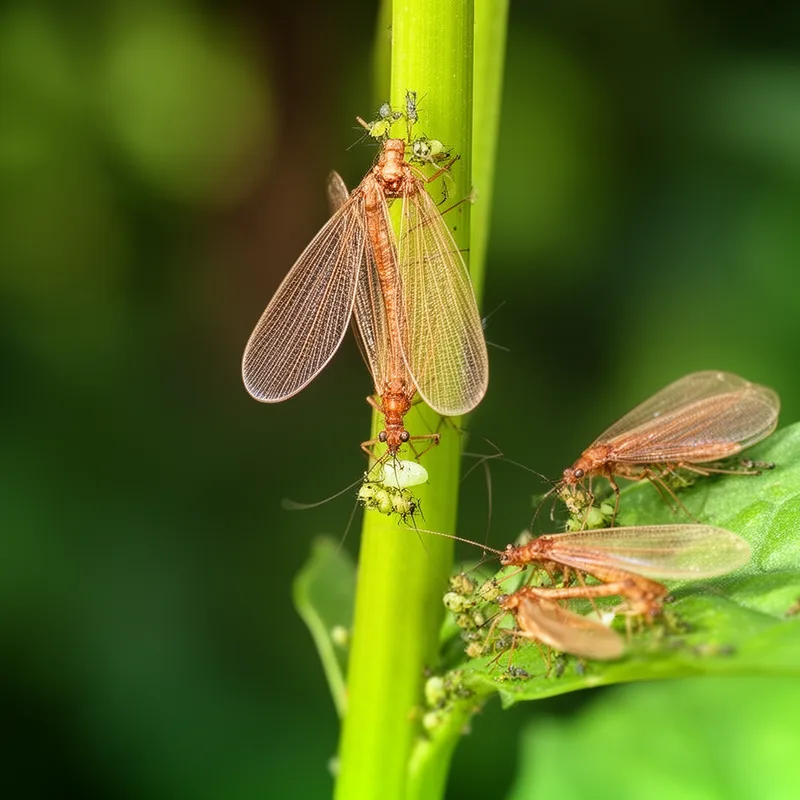
family Hemerobiidae
- noun
- Specialized
- The family Hemerobiidae includes many species of brown lacewings found in forests worldwide.
Examples
-
The family Hemerobiidae is often found in gardens, where their larvae help manage aphid populations.
-
Researchers studied the family Hemerobiidae to understand their role in controlling pest populations.
-
Members of the family Hemerobiidae are distinguished by their finely veined wings and soft bodies.
-
The family Hemerobiidae includes many species of lacewings.
-
Did you know that the family Hemerobiidae is important for pest control?
-
Entomologists have classified the family Hemerobiidae as beneficial insects due to their dietary preferences.
-
Observing a family Hemerobiidae can offer insights into the health of the ecosystem.
Synonyms
A group of small brown lacewing insects with delicate netlike wings whose young eat garden pests
Surface Forms
Morphology
The phrase is compositional: 'family' as a scientific grouping combined with the taxonomic name 'Hemerobiidae' directly yields the meaning 'the family called Hemerobiidae (a group of related insects)'. This noun + proper-name pattern for taxonomic ranks is standard and cross-linguistically common, so a B1 learner who knows both constituents would understand it.
Etymology
Family Hemerobiidae is the formal group name for the small insects called 'brown lacewings'. Think of a family of tiny creatures with delicate, lace-like wings — that picture links the word Hemerobiidae to this group of brown, soft-bodied insects.

