
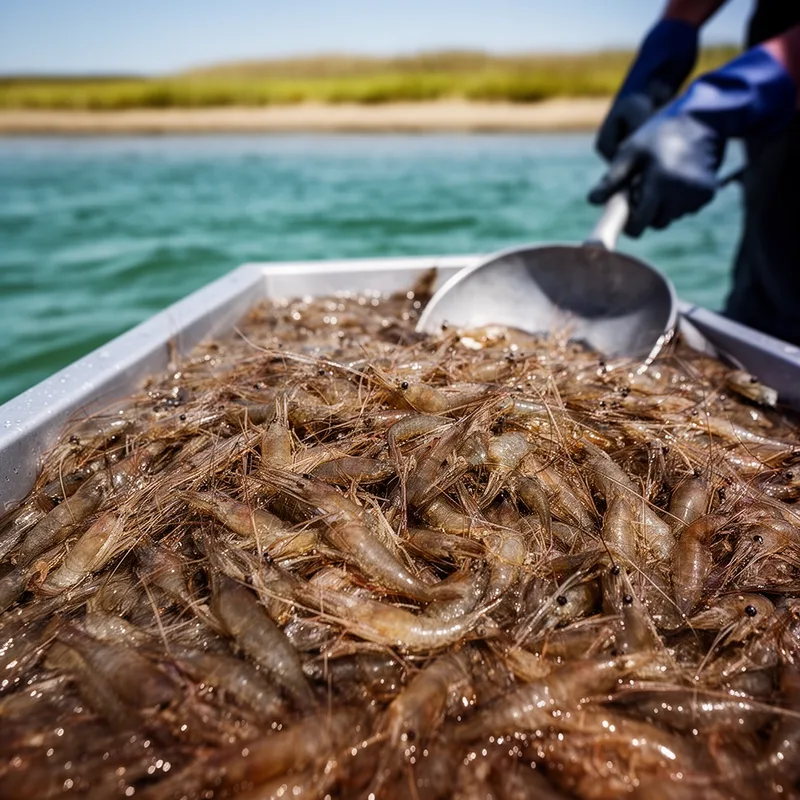
family Crangonidae
- noun
- Specialized
- The family Crangonidae includes many species of commercially important shrimps.
Examples
-
The family Crangonidae includes several species of small shrimps that are important for the fishing industry.
-
Many members of the family Crangonidae are harvested for food.
-
Many marine biologists study the family Crangonidae to understand estuarine ecosystems.
-
Scientists discovered a new member of the family Crangonidae along the Pacific coast.
-
The family Crangonidae includes several species of shrimp.
-
Many marine biologists study the family Crangonidae to understand their ecological roles in marine environments.
-
Many members of the family Crangonidae are harvested for food and contribute to local economies.
Synonyms
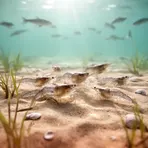
Small to medium shrimps, like sand shrimps, that live near coasts
Surface Forms
Morphology
The phrase names a taxonomic group composed transparently from 'family' (a scientific grouping) plus the taxon name 'Crangonidae' (shrimp), so its meaning — the family of shrimps called Crangonidae — follows directly from the constituents. This compositional, cross-linguistically common naming pattern is predictable for learners who know both parts, making it immediately comprehensible.
Etymology
Family Crangonidae comes from the genus Crangon, a common small shrimp, so the name paints a picture of a 'family' of little shrimps and means 'a family of small shrimps'.

